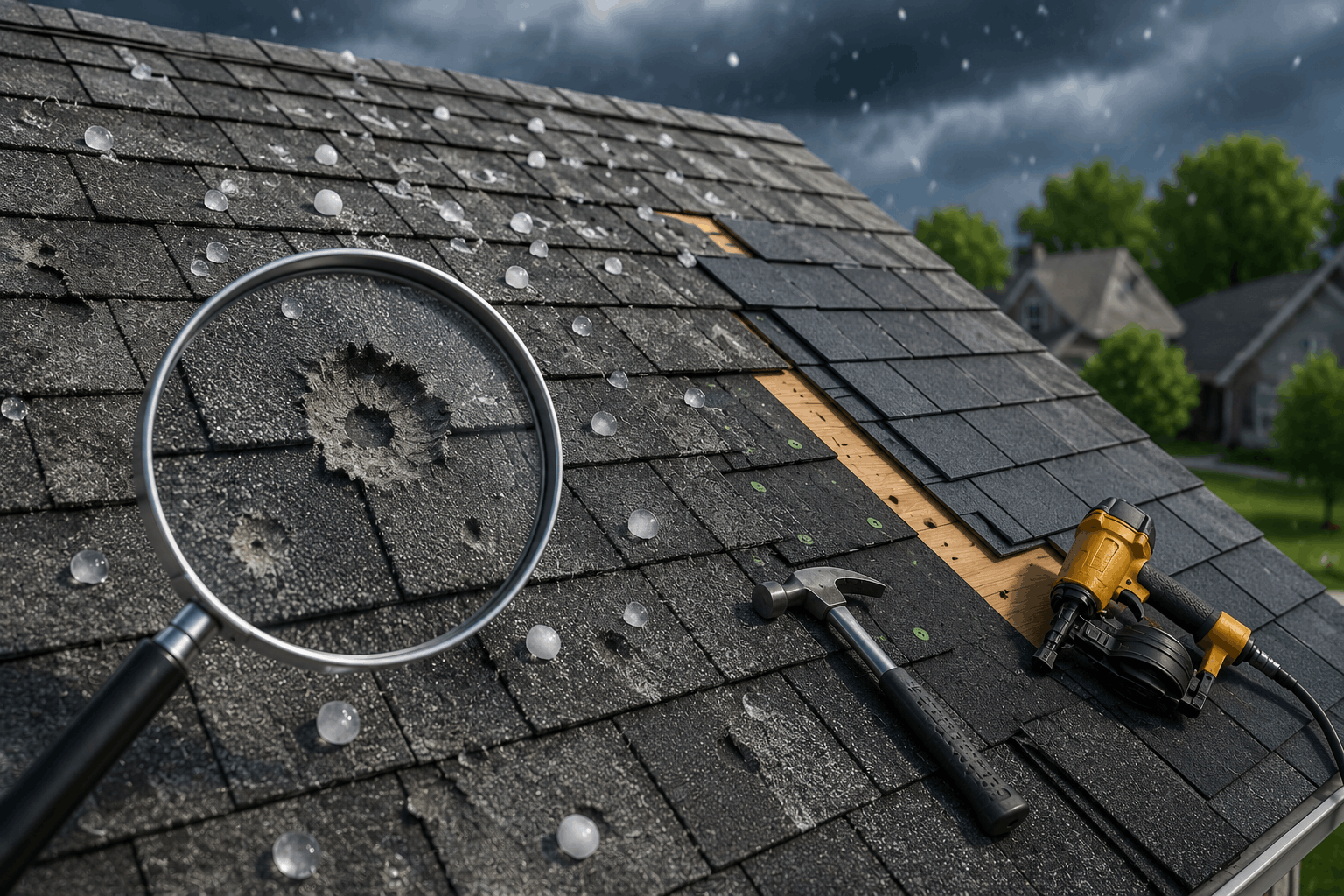
You walk outside after a storm, look up at your roof, and something feels off. Maybe there are little dings scattered across the shingles, or maybe the gutters look like they took a beating. The question that follows almost every single time is simple: can hail damage on a roof be repaired, or is this the start of a much bigger bill?
Good news first. A large share of hail damage we see across Katy and Fort Bend County can be repaired without tearing off the whole roof. The catch is that not all hail damage looks the same, and some of it hides in places you’d never think to check.
Why This Question Hits Different After a Texas Storm
Southeast Texas gets hit with hail more than most people realize. Spring storms roll in off the Gulf, and when the atmosphere sets up right, hail the size of golf balls or bigger can shred through a roof in minutes. Homeowners in Katy, Cinco Ranch, and Fulshear often don’t even hear it happening from inside, then step outside the next morning to dented gutters, cracked vents, and shingles that look bruised.

The stakes here aren’t small. A roof that isn’t repaired properly after hail can keep leaking quietly for months, sometimes without a single visible drip inside the house, until the decking underneath starts to rot.
Can Hail Damage on a Roof Actually Be Repaired? The Short Answer
Yes, in most cases. Hail damage repair is common, and a properly trained crew can usually fix isolated impact points, replace a handful of shingles, or patch flashing without disturbing the rest of the roof. Think of it like a car door ding. If it’s shallow and contained, a body shop smooths it out. If the whole panel is caved in, you’re replacing the panel, not sanding it down.
When Repair Is the Right Call
If the damage is scattered but shallow, meaning the shingle mat isn’t cracked all the way through and the granules haven’t been stripped off in wide patches, a repair usually holds up fine. Same goes for damaged flashing, dented vent caps, or a handful of bruised shingles concentrated on one slope.
When Hail Damage Means You Need a Full Replacement
Once hail has cracked the fiberglass mat underneath the granules across a large portion of the roof, patch repairs won’t hold. At that point, water finds its way in no matter how carefully you seal individual spots. Roofs older than 15 to 20 years are also more brittle to begin with, so hail that would only dent a newer roof can crack an older one clean through.
How to Spot Hail Damage on Your Own Roof
Signs on Asphalt Shingles
Look for random, non-uniform dark spots where the protective granules have been knocked loose, exposing the black asphalt mat underneath. Real hail hits tend to look scattered and random, not lined up in neat rows the way foot traffic or manufacturing marks might appear.
Signs on Metal Roofing
Metal shows hail differently. You’ll usually see small, shallow dents rather than cracks. Cosmetic dents don’t always affect performance, but they’re worth documenting for insurance purposes even if they’re not an immediate leak risk.
Signs You’ll Only Catch From the Ground or Attic
Check your gutters, downspouts, and any exposed AC unit fins. If those are dented, there’s a strong chance your roof took a similar hit, even if it’s harder to see from the ground. Inside, a fresh water stain on the attic ceiling or insulation is often the first real clue something on the roof let go.
Storm Damage Roof Repair and Your Insurance Claim
Timing Matters More Than You Think
Most Texas insurance policies give homeowners a window, often around one year, to file a hail damage claim, but waiting isn’t free. The longer you wait, the more room an adjuster has to argue the damage came from something else, like normal wear. Getting an inspection soon after a known storm event puts the timeline clearly on your side.
Documentation Before the Adjuster Shows Up
Photos matter. A lot. Before any repair work starts, get clear images of the damage from multiple angles, along with the date of the storm if you know it. The Insurance Information Institute recommends documenting storm damage thoroughly and promptly, since that record becomes the backbone of your claim if anything gets disputed later.
What the Actual Repair Process Looks Like
Inspection First
A proper hail inspection isn’t a quick glance from the driveway. It means walking the actual roof slopes, checking flashing, vents, and pipe boots, and looking at the attic from underneath. Drone inspections have become common for steep or high roofs where walking the surface safely isn’t practical.
Matching Materials Without Making Your Roof Look Patched
One thing homeowners worry about is a repaired section standing out like a bandage. A crew that keeps extra matching shingle stock, or sources the closest available match, can usually blend a repair into the surrounding roof well enough that it’s not obvious from the street. On older roofs where the shingle color has weathered over the years, a slight difference is sometimes unavoidable, and an honest roofer will tell you that upfront rather than pretend it won’t show at all.
If you’re dealing with fresh dents or cracked shingles right now, our Storm Damage Roof Repair team can walk the roof, document what’s there, and give you a straight answer on whether a repair will hold or whether you’re looking at something bigger.
How Long Hail Repairs Last
A well-executed repair on a roof that wasn’t already near the end of its life can last just as long as the rest of the roof around it, often another 10 to 15 years depending on material and age. The key word is well-executed. A rushed patch job from a crew that blew through town after the storm and left before the next season is a completely different story, and it’s part of why picking a local, accountable roofer matters as much as the repair itself.
Final Thoughts on Hail Damage Roof Repair
Hail damage doesn’t automatically mean a new roof, and it doesn’t mean you should ignore it either. The smartest move is getting eyes on the roof soon after a storm, documenting what’s there, and letting a local crew tell you honestly whether repair or replacement is the right call for your specific situation. That honesty is worth more than a fast, cheap patch that fails again next storm season.
If you spotted dents, missing granules, or a leak after a recent storm, our Hail Damage Roof Repair crew can get out to your property, document everything for your insurance claim, and repair what can genuinely be repaired. Call 346-733-8558 to get on the schedule.
Frequently Asked Questions
How do I know if hail damage is bad enough to file an insurance claim? If you see exposed shingle mat, cracked shingles, or dented metal flashing and vents, it’s worth having a professional inspection before deciding. Even damage that looks minor from the ground can be more serious up close.
Does a small roof repair after hail affect my home’s resale value? Not usually, as long as the repair is done well and matches the surrounding roof reasonably closely. A documented, professionally completed repair is generally viewed favorably compared to unaddressed storm damage.
Can I repair hail damage myself? Minor issues like a loose shingle might seem tempting to fix solo, but walking a roof safely and correctly identifying hail damage versus normal wear takes training. A misdiagnosed repair can also complicate an insurance claim later.
How soon after a hailstorm should I get my roof inspected? As soon as reasonably possible, ideally within a few weeks. Prompt inspection strengthens your insurance claim and prevents smaller issues from turning into leaks or rot.
Will my insurance premium go up after filing a hail damage claim? It can, depending on your insurer and claims history, but that’s a conversation worth having directly with your insurance agent. It shouldn’t stop you from filing a legitimate claim for real storm damage.