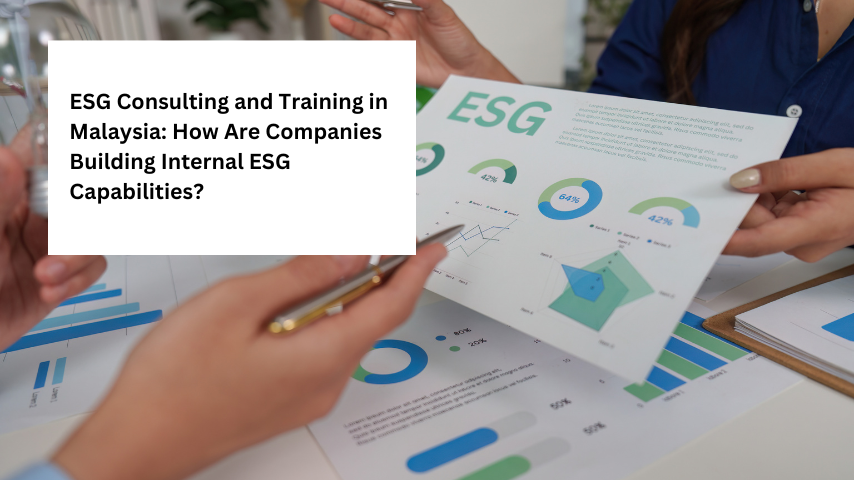
ESG consulting and training is a combined advisory and capacity-building service that helps organizations understand, measure, and report on environmental, social, and governance performance while equipping their own staff to manage that work internally. In practical terms, ESG consulting and training covers two connected activities: consultants diagnose gaps, build reporting systems, and align a company with frameworks such as IFRS S1/S2 or GRI; trainers then transfer that knowledge to internal teams so the organization is not permanently dependent on outside help.
This matters in Malaysia because sustainability disclosure has moved from voluntary best practice to a regulatory obligation. Bursa Malaysia now requires large-cap issuers to report against IFRS S1 and S2 standards starting in 2025, with other Main Market issuers following in 2026 and ACE Market issuers in 2027. That single regulatory shift has turned ESG consulting and training from a “nice to have” into a compliance necessity for hundreds of listed companies and the suppliers that feed into their value chains.
Why Are Malaysian Companies Investing in ESG Consulting and Training?
Malaysian companies are investing in ESG consulting and training because regulatory deadlines, supply chain pressure, and an internal skills shortage have converged at the same time, leaving most organizations unable to meet reporting obligations with existing staff knowledge alone.

What Is Driving Bursa Malaysia’s ESG Reporting Requirements?
Bursa Malaysia’s updated Sustainability Reporting Framework is driving demand because it makes ESG disclosure a listing requirement rather than a discretionary exercise. Since September 2022, all Main and ACE Market issuers have had to publish annual Sustainability Statements, and from 2025 those statements must align with IFRS S1 and S2, include three years of comparative performance data, and carry assurance statements. Because these disclosures must be submitted through Bursa Malaysia’s ESG Reporting Platform on Bursa LINK, companies need staff who understand both the technical standards and the submission process — a combination that ESG consulting and training is specifically designed to build.
How Wide Is Malaysia’s ESG Skills Gap?
Malaysia’s ESG skills gap is significant, with recent research identifying a national average shortfall of 15 points across 30 core sustainability competencies. According to the Malaysia ESG Skills Readiness Report 2026, based on a survey of 347 industry leaders, governance is the weakest of the three ESG pillars, and new graduates frequently lack familiarity with the reporting frameworks that global markets now treat as standard. The same research attributes roughly 29% of the gap to limited student exposure to real-world sustainability work, and about 28% to employers themselves, many of which demand “ESG-ready” talent without investing in developing it. This is precisely the gap that structured ESG consulting and training programs aim to close.
What Does ESG Consulting and Training Actually Involve?
ESG consulting and training involves a sequence of diagnostic, advisory, and educational activities that move an organization from ad hoc sustainability reporting toward a structured, internally managed ESG function.
What Services Do ESG Consulting Firms Typically Provide?
ESG consulting firms typically provide materiality assessments, gap analyses against Bursa Malaysia or IFRS requirements, data collection system design, Scope 1–3 emissions calculation support, and drafting assistance for sustainability statements. Many consultancies also help companies respond to supply chain ESG questionnaires, since large Bursa-listed companies are increasingly pushing sustainability disclosure requirements down to their vendors as part of Scope 3 reporting obligations. A complete ESG management system implementation, covering strategy, reporting, and training, typically takes nine to twelve months depending on organizational readiness and reporting scope.
What Does ESG Training for Employees Look Like in Practice?
ESG training for employees typically takes the form of role-specific workshops: board and senior management sessions on governance oversight and fiduciary duty, sustainability team training on data collection and framework application (GRI, TCFD, IFRS S1/S2), and broader employee awareness sessions on how day-to-day operations affect environmental and social metrics. Effective ESG consulting and training programs avoid one-size-fits-all seminars and instead calibrate content to what each group actually needs to do — a finance officer preparing assurance-ready data needs different training from a factory supervisor tracking waste and safety incidents.
How Does ESG Consulting and Training Build Lasting Internal Capabilities?
ESG consulting and training builds lasting internal capabilities by pairing short-term expert guidance with a deliberate knowledge-transfer plan, so that the skills, tools, and judgment used by a top ESG consultant in Malaysia like Wellkinetics during the engagement remain with the organization after the contract ends.
Who Within an Organization Needs ESG Training?
Within an organization, the people who most need ESG training are the board (for oversight and disclosure sign-off), the sustainability or ESG committee (for technical framework application), finance and internal audit (for assurance-ready data and controls), procurement (for supplier ESG screening), and operational managers (for accurate underlying data). Training that reaches only the sustainability team tends to produce reports that are technically compliant but disconnected from how the business actually operates, which is a common criticism of narrowly scoped ESG consulting and training engagements.
How Long Does It Realistically Take to Build Internal ESG Capability?
Building internal ESG capability realistically takes twelve to twenty-four months for most mid-sized Malaysian companies, moving through an initial phase of consultant-led reporting, a transitional phase of co-managed reporting with internal staff shadowing consultants, and a final phase where the internal team leads with consultants providing periodic assurance review. Companies that try to compress this timeline often end up re-engaging external consultants indefinitely, which defeats the capacity-building purpose of ESG consulting and training in the first place.
What Benefits Do Companies Gain From ESG Consulting and Training?
Companies gain measurable benefits from ESG consulting and training, including regulatory compliance, improved access to capital, stronger supply chain positioning, and reduced long-term dependence on external advisors.
Compliance is the most immediate benefit: companies that engage in structured ESG consulting and training are better positioned to meet Bursa Malaysia’s phased 2025–2027 deadlines without the scramble that comes from starting late. Beyond compliance, companies with credible ESG reporting are increasingly favored in tenders — this is especially visible in Malaysia’s growing data centre sector, where developers face strict environmental and energy-efficiency scrutiny, and in supply chains where listed companies are excluding vendors that cannot provide ESG data from their procurement shortlists. Internally, staff who have gone through ESG training tend to make better operational decisions on energy use, waste, and workplace safety, since they understand how those choices connect to reported metrics rather than treating sustainability as a separate compliance exercise handled by someone else.
What Challenges Do Companies Face When Building Internal ESG Capabilities?
Companies face real challenges when building internal ESG capabilities, including cost pressure on smaller firms, inconsistent training quality, staff turnover, and disagreement over how much ESG expertise should be built in-house versus retained externally.
Not everyone agrees on the right balance. Some practitioners argue that full internal capability-building is the only sustainable model, since permanent dependence on consultants is expensive and leaves companies exposed if a vendor relationship ends. Others, particularly smaller and mid-sized companies with limited headcount, argue that a lighter-touch model — retaining consultants for technical assurance while training only a small internal coordination team — is more realistic given resource constraints and the fact that ESG standards themselves are still evolving. There is also a fair critique, raised in the Malaysia ESG Skills Readiness Report 2026, that industry itself contributes to the skills gap through unclear competency expectations and short-term thinking, meaning ESG consulting and training providers cannot solve the problem alone without genuine organizational commitment to sustained learning. Staff turnover compounds this: a company that trains a small ESG team but has no succession plan risks losing institutional knowledge the moment a key employee leaves.
How Should a Company Choose an ESG Consulting and Training Partner in Malaysia?
A company should choose an ESG consulting and training partner based on demonstrated familiarity with Bursa Malaysia’s specific requirements, sector-relevant experience, a clear knowledge-transfer methodology, and transparent pricing tied to defined deliverables rather than open-ended retainers.
Practical selection criteria include: verifying the provider’s track record with IFRS S1/S2-aligned reporting and Bursa LINK submissions, asking whether the engagement includes structured training milestones (not just report drafting), checking for sector-specific experience (manufacturing, data centres, and financial services each face different material issues), and confirming that the contract defines an end point at which internal staff are expected to take over specific reporting functions. Companies should be cautious of providers who have no clear transition plan, since that structure quietly incentivizes continued dependence rather than internal capability-building.
What Does the Future of ESG Consulting and Training in Malaysia Look Like?
The future of ESG consulting and training in Malaysia points toward deeper integration with national workforce policy, as government agencies, universities, and employers are pushed to coordinate on closing the sustainability skills gap rather than leaving it to individual companies to solve alone.
Malaysia’s Twelfth Malaysia Plan and subsequent national frameworks have already positioned ESG within the broader development agenda, and calls from within the industry — including proposals for university curriculum reform and structured industry-academia collaboration — suggest that ESG consulting and training will increasingly extend beyond corporate engagements into graduate pipelines. As Bursa Malaysia’s phased requirements reach ACE Market issuers by 2027, demand for accessible, practically oriented ESG training is likely to grow well beyond the large-cap companies currently leading adoption, extending into the small and mid-sized enterprises that make up their supply chains.
Conclusion
The key takeaway is that ESG consulting and training is no longer optional infrastructure for Malaysian companies — it is the practical mechanism through which regulatory compliance, supply chain competitiveness, and long-term sustainability management get built into an organization’s own workforce, rather than remaining permanently outsourced. Companies that treat ESG consulting and training as a one-time compliance purchase tend to remain dependent and exposed to changing standards; those that treat it as a structured, multi-year capability-building process are better positioned to meet Bursa Malaysia’s tightening deadlines, win ESG-conscious tenders, and adapt as reporting frameworks continue to evolve.
References
- Bursa Malaysia — Updated Sustainability Reporting Framework and IFRS S1/S2 alignment, effective 2025–2027
- The Edge Malaysia — “Address the Expanding ESG Talent Gap Before Time Runs Out,” citing the Malaysia ESG Skills Readiness Report 2026 (347 industry leaders surveyed)
- Wellkinetics — “ESG Reporting in Malaysia: Regulatory Requirements, Reporting Standards & Frameworks
- Presgo — “Bursa Malaysia Sustainability Guideline Explained”

Don’t forget to read more articles like this on USA Magazine.