A rider might not book a taxi not mainly because of the fare, but part of the reason also goes to the payment experience. Sometimes paying the driver either with or without cash feels like a difficult task. Remaining change, low internet connectivity, and just plain and simple nothing working make a perfect ride experience ending somewhat forgettable. As a result, this kind of experience makes it harder to compete in a tough market because of few or no repeated bookings.
An in-app wallet is the best solution to this problem and is the last and always-working option available to the rider from modern-day Uber clone apps. Many white-label taxi booking platforms develop the wallet feature directly into their ready-made clone app scripts as a standard feature.
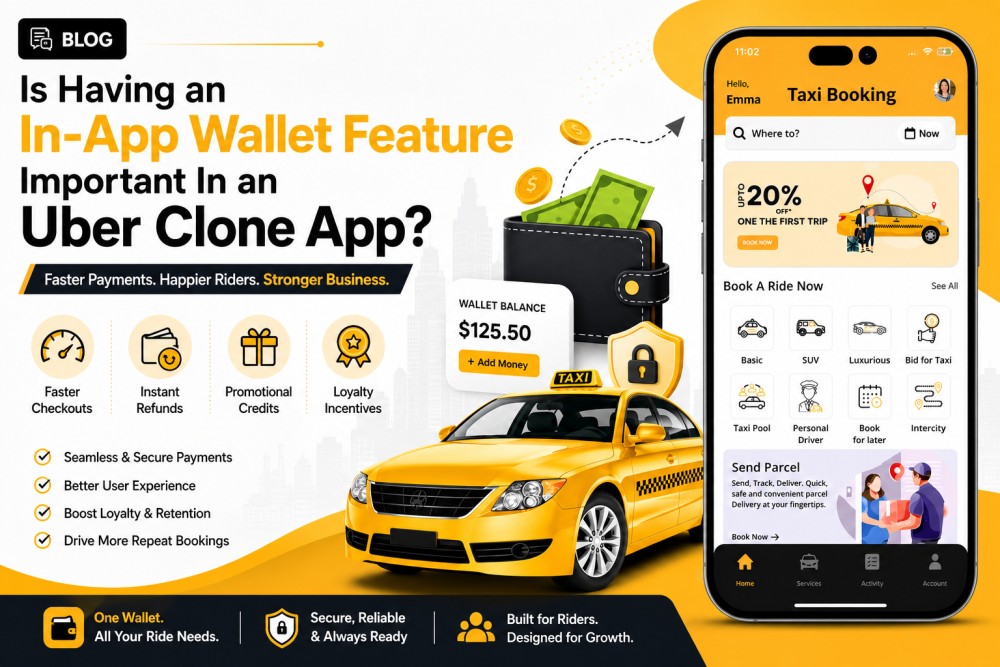
When booking a ride, modern Uber clone apps usually give riders three simple ways to pay: cash, card, or the in-app wallet. The wallet is quite easy to use, allowing riders to add money right from the payment screen, and it often connects to a rewards system where traveling more miles earns them coins that automatically turn into wallet balance.

However, mostly the daily or regular riders are the ones who actually take the time to top up their wallets and stick with the app. People who only take a ride once in a blue moon usually just pay directly with their cards and skip the wallet features altogether.
In-App Wallet Feature Impact In a Taxi Booking Platform
1. Checkout Speed
Paying through a card or bank often involves dealing with OTPs, loading screens, and waiting for bank server approvals, which can slow down the entire booking process. But if a rider has a balance in their in-app wallet, the payment happens in the blink of an eye. The fare is deducted immediately without having to rely on any third-party payment gateways to do their job. For quick, everyday city commutes where people are usually in a hurry, having a smooth and fast on-demand taxi app booking experience without payment hiccups actually matters a lot more to the business’s success than most founders think.
2. Refunds
Another big headache for riders is waiting for refunds. Getting money back into a bank account after a canceled ride can take anywhere from three to seven business days. This waiting period frustrates riders far more than the actual ride cancellation itself. With an in-app wallet, the refunded money goes back into the user’s account instantly. It completely saves the rider from the stress of tracking pending transactions and keeps their mood from souring.
3. Promotional Credits
When it comes to marketing, offering discounts and promo codes directly through bank payment gateways usually costs the app owner extra processing fees for every transaction. Using the wallet completely bypasses these hidden costs. The business owner can easily hand out vouchers, run referral programs to attract new users, and launch promo codes where the reward money goes straight into the rider’s wallet. In the end, this lets the taxi booking platform keep full control over their promotional budget without losing a cut to external payment processors.
4. Loyalty Incentives
The wallet also serves as the backbone for any loyalty program. As riders earn reward coins on their trips, those rewards pile up in their wallet, giving them a solid reason to open your app again instead of checking a competitor’s Uber-like app. Just like before, this strategy works best for daily commuters who take enough rides to actually see their rewards grow into something useful, while a person who books twice a month probably won’t even notice. But once a rider adds their own money or builds up enough rewards in the app, they have essentially pre-committed to choosing your taxi service over others.
Modern Riders Expect More Than Card Payments
In busy cities where everyone relies on smartphones and commutes daily, this group of users is massive. With the global digital wallet market expected to hit around $68 billion by 2026, launching a ride-hailing app that forces users to pay the old-fashioned way will just end up making the business look completely outdated and out of touch.
With digital and mobile wallet usage growing massively around the world over the last few years, today’s riders simply expect smooth, contactless payment options as a basic requirement as it grew 221% from 2022 to 2026. Instead of treating the wallet feature like an afterthought, a ride-hailing business owner who makes wallet top-ups a normal and central part of the payment experience will easily attract modern users who already prefer handling their money directly inside apps.
Final Thoughts
The good news is that the group of daily riders who prefer sticking to one app and using digital payments is actually quite large and constantly growing. That is exactly why many taxi booking platforms must now include the wallet, top-up features, and coin reward systems right inside their white-label Uber clone as a standard package without charging any extra money.
Ultimately, the wallet feature truly shines when people are booking a lot of rides and the business owner is actively running promotions. The riders will naturally show their appreciation for a hassle-free payment experience by simply coming back to the app again and again.
FAQs
Does having a wallet feature get more taxi bookings?
Not entirely, but it adds to the overall taxi booking app user experience and gives a convenient, alternative, and most reliable approach to the payment habit.
Are wallet refunds faster than card refunds?
Card refunds go back through a payment gateway and sometimes take 3-4 business days to appear in the bank account. Whereas a wallet credit lands instantly inside the app.

What kind of promotions work best with an in-app wallet?
Some consider referral credits, while others also add first-ride bonuses, as these kinds of promotions give riders a concrete reason to add more funds into their ride-hailing app wallets, and once a balance is sitting there, riders naturally come back to spend it rather than using another method, or they might save it for emergency use.

