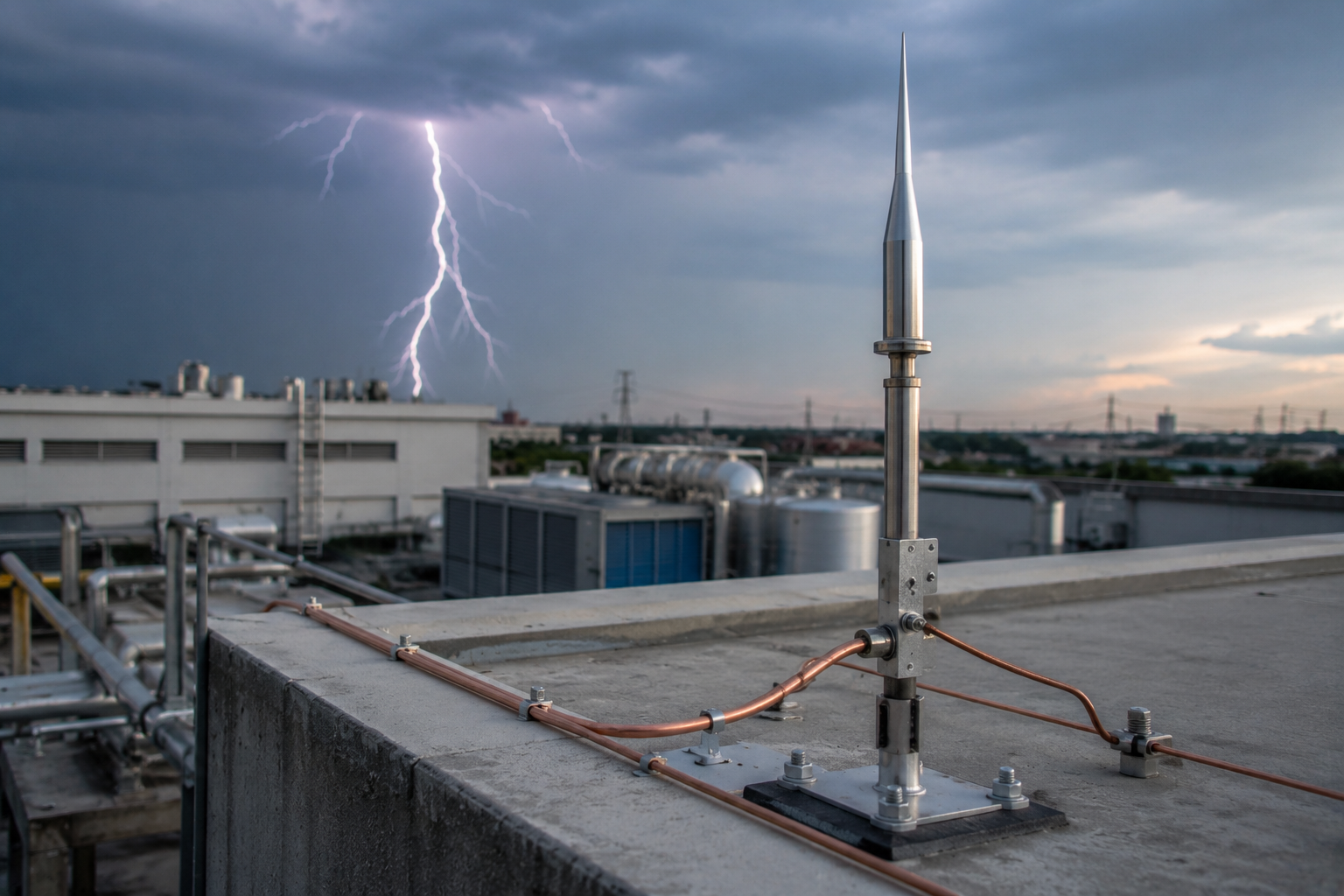
A lightning strike lasts only a fraction of a second, yet the damage it can cause may take weeks—or even months—to recover from. A single strike can disrupt business operations, destroy expensive equipment, trigger fires, and compromise the structural integrity of a building. For facilities that rely on uninterrupted power and sensitive electronics, the consequences can be even more severe.
In the UAE, modern skylines, industrial facilities, data centres, and infrastructure projects continue to grow in scale and complexity. While the region may not experience thunderstorms as frequently as some parts of the world, lightning remains a genuine risk that cannot be ignored. That’s why investing in a reliable earthing and lightning protection system has become a critical aspect of building safety and asset protection.
But how exactly does a lightning protection system work, and why is it so important?
Understanding the Threat of Lightning
Lightning is essentially a massive electrical discharge between clouds, the atmosphere, and the ground. A typical lightning strike can carry tens of thousands of amperes of current and generate temperatures hotter than the surface of the sun.
When lightning strikes a structure directly, the energy must travel somewhere. Without a designated path, that energy can pass through building materials, electrical systems, communication networks, and equipment. The result may include:
- Structural damage
- Electrical fires
- Equipment failure
- Data loss
- Power outages
- Safety hazards for occupants
The goal of a lightning protection system is simple: safely redirect this enormous electrical energy away from the building and into the ground.
The Basic Principle Behind Lightning Protection
Many people imagine a lightning rod as the entire protection system. In reality, a lightning rod is just one component of a larger network.
An effective earthing and lightning protection system creates a controlled pathway for lightning current to travel safely to the earth without damaging the structure or its contents.
The system works much like a highway. Instead of allowing lightning to find its own unpredictable route through a building, it provides a dedicated, low-resistance path that safely channels the energy into the ground.
Key Components of a Lightning Protection System
Air Terminals (Lightning Rods)
These are the visible metal rods installed on rooftops and elevated points of a structure.
Their role is to intercept lightning strikes before they impact vulnerable areas of the building. Contrary to popular belief, lightning rods do not attract lightning; they simply provide a preferred point of contact when a strike occurs.
Down Conductors
Once lightning is intercepted, down conductors carry the electrical current safely toward the ground.
These conductors are strategically positioned to ensure the current flows along a controlled route rather than through structural components or electrical systems.
Grounding System
The grounding system is often considered the most important element of the entire installation.
It disperses the lightning energy into the earth where it can be safely absorbed. Without proper grounding, even the best lightning rods and conductors may not provide effective protection.
This is why professional earthing and lightning protection design place significant emphasis on achieving low earth resistance values.
Surge Protection Devices
Not every lightning-related problem comes from a direct strike.
A nearby strike can generate powerful electrical surges that travel through utility lines and communication networks. These surges can damage computers, servers, automation systems, and sensitive electronics.
Surge Protection Devices (SPDs) help prevent this by diverting excess voltage away from critical equipment.
Protecting More Than Just the Building
Many property owners focus on structural protection, but equipment protection is equally important.
Think about a modern office building. Even if the structure survives a lightning strike without visible damage, the loss of servers, security systems, network infrastructure, or building automation controls could result in substantial operational disruption.
Industrial facilities face even greater risks. Manufacturing equipment, process controls, and monitoring systems often represent investments worth millions of dirhams.
A comprehensive lightning protection strategy safeguards both the building and the technology that keeps it functioning.
Why Earthing Plays Such a Critical Role
The effectiveness of any lightning protection system depends heavily on proper grounding.
Imagine pouring water into a drain. If the drain is blocked, the water has nowhere to go. Similarly, if lightning energy cannot be effectively dispersed into the ground, it may seek alternative paths that can damage equipment or create dangerous voltage differences.
A well-designed earthing and lightning protection system ensures that electrical energy is safely dissipated while minimising risks to people and assets.
In regions like the UAE, soil conditions can vary significantly, making professional grounding design especially important.
Benefits for UAE Buildings and Facilities
As buildings become more technologically advanced, the value of lightning protection continues to increase.
Key benefits include:
Enhanced Safety
Protecting occupants remains the primary objective. A properly installed system reduces the risk of injury caused by lightning-related incidents.
Equipment Protection
Sensitive electronics, communication systems, and automation equipment are less vulnerable to surge-related damage.
Reduced Downtime
Businesses can avoid costly interruptions caused by electrical failures and equipment replacement.
Lower Repair Costs
Preventing damage is almost always more cost-effective than repairing or replacing affected systems after a lightning event.
Compliance with Standards
Many projects require compliance with international electrical safety standards, making lightning protection an important consideration during construction and maintenance.
Frequently Asked Questions
Does every building need lightning protection?
Not necessarily, but risk assessments often recommend protection for commercial buildings, industrial facilities, high-rise structures, educational institutions, hospitals, and facilities containing sensitive equipment.
Can lightning damage electronics without striking the building directly?
Yes. Nearby strikes can create voltage surges that travel through power and communication lines, damaging connected equipment.
How often should a lightning protection system be inspected?
Most experts recommend periodic inspections and testing to ensure all components remain in good working condition and comply with applicable standards.
Conclusion
Lightning may be unpredictable, but the damage it causes doesn’t have to be. A properly designed earthing and lightning protection system provides a safe path for electrical energy, helping protect buildings, equipment, and occupants from potentially devastating consequences.
Whether it’s a commercial tower, industrial facility, data centre, or residential development, investing in reliable lightning protection is ultimately an investment in safety, operational continuity, and peace of mind. The best approach is to work with qualified professionals who can assess your risks, design an effective system, and ensure long-term protection for your property and assets.