Introduction
Modern andrology laboratory requires careful planning, specialized engineering, regulatory compliance, and advanced infrastructure. Fertility clinics, IVF centers, hospitals, and reproductive healthcare facilities rely on properly designed andrology rooms to perform semen analysis, sperm preparation, cryopreservation, and other diagnostic procedures under controlled environmental conditions. For this reason, many healthcare providers partner with an experienced Andrology Room Setup Company to ensure a smooth and efficient project execution process.
One of the most common questions asked by clinic owners and healthcare administrators is how long it takes to complete an andrology room setup. The answer depends on several factors, including project size, laboratory requirements, regulatory approvals, equipment selection, infrastructure complexity, and site readiness. While smaller facilities may be completed within a few weeks, larger and more sophisticated laboratories may require several months for full completion and commissioning.
This article explores the various phases involved in an andrology room setup and explains the factors that influence project completion timelines.
Understanding the Scope of an Andrology Room Setup
Before discussing timelines, it is important to understand what an andrology room setup includes.
A complete setup often involves:
- Laboratory design
- HVAC installation
- HEPA filtration systems
- Electrical systems
- Laboratory furniture
- Medical equipment integration
- Environmental monitoring systems
- Validation and testing
The scope of work directly affects the overall project duration.
Initial Consultation and Requirement Analysis
Every successful project begins with a detailed consultation process.
During this phase, specialists evaluate:
- Available space
- Clinical requirements
- Workflow needs
- Future expansion plans
This stage typically takes a few days to two weeks depending on project complexity.
Site Survey and Assessment
After initial discussions, a site survey is conducted.
The survey helps identify:
- Infrastructure requirements
- Utility availability
- Construction constraints
- Environmental considerations
A thorough assessment ensures accurate project planning.
Concept Design Development
The next step involves creating a conceptual design.
Design teams prepare:
- Laboratory layouts
- Equipment placement plans
- Workflow diagrams
- Utility requirements
An experienced Andrology Room Setup Company develops designs that optimize efficiency while meeting healthcare standards.
Detailed Engineering Design
Once the concept is approved, detailed engineering begins.
This phase includes:
- HVAC design
- Electrical drawings
- Mechanical plans
- Laboratory furniture specifications
Detailed planning reduces installation errors and project delays.
Approval and Review Process
Many healthcare projects require internal reviews and approvals.
This process may involve:
- Management approval
- Regulatory review
- Budget confirmation
Approval timelines vary depending on organizational requirements.
Procurement of Materials
After design approval, procurement activities begin.
Items commonly ordered include:
- Modular panels
- HVAC components
- HEPA filters
- Laboratory furniture
- Monitoring systems
Procurement timelines can range from a few days to several weeks.
Equipment Selection and Ordering
Laboratory equipment often requires separate procurement planning.
Equipment may include:
- Microscopes
- Centrifuges
- Incubators
- Cryogenic storage systems
Delivery schedules can significantly influence project completion timelines.
Manufacturing of Modular Components
If modular construction methods are used, components are manufactured off-site.
Benefits include:
- Faster installation
- Better quality control
- Reduced site disruption
Manufacturing generally occurs simultaneously with site preparation.
Site Preparation Activities
Before installation begins, the site must be prepared.
Tasks may include:
- Demolition work
- Utility upgrades
- Structural modifications
- Flooring preparation
Preparation time depends on existing facility conditions.
Installation of Modular Wall Systems
Modular wall systems are installed once the site is ready.
Advantages include:
- Faster construction
- Improved hygiene
- Easier maintenance
Installation typically takes several days depending on room size.
Ceiling Installation
Specialized ceilings support HVAC and laboratory systems.
Installation includes:
- Ceiling panels
- Utility integration
- Access provisions
Proper ceiling installation is essential for laboratory functionality.
Flooring Installation
Healthcare-grade flooring is installed to ensure durability and cleanliness.
Common features include:
- Seamless surfaces
- Chemical resistance
- Anti-static properties
Flooring installation generally requires a few days.
HVAC System Installation
HVAC systems are among the most critical components of an andrology laboratory.
Installation includes:
- Air handling units
- Ductwork
- Diffusers
- Control systems
HVAC work often represents a major portion of the project timeline.
HEPA Filtration Integration
HEPA filtration systems are installed to maintain air quality.
Benefits include:
- Reduced contamination
- Improved sample protection
- Enhanced laboratory performance
Filter installation must be completed before validation testing.
Electrical System Installation
Electrical infrastructure supports laboratory equipment and environmental systems.
Work includes:
- Wiring
- Power outlets
- Backup systems
- Lighting installation
Electrical work often occurs alongside HVAC installation.
Laboratory Furniture Installation
Furniture installation typically follows infrastructure completion.
Common items include:
- Workstations
- Storage cabinets
- Laboratory benches
Furniture placement supports workflow optimization.
Equipment Installation and Integration
Once infrastructure is complete, laboratory equipment is installed.
This phase includes:
- Equipment positioning
- Utility connections
- Calibration preparation
Equipment installation timelines depend on the number of instruments involved.
Environmental Monitoring System Setup
Modern laboratories require environmental monitoring technologies.
Systems track:
- Temperature
- Humidity
- Air quality
- Pressure levels
Installation and configuration are essential before commissioning.
Workflow Optimization and Final Adjustments
Laboratory layouts are reviewed to ensure operational efficiency.
Adjustments may include:
- Equipment relocation
- Storage optimization
- Workflow improvements
Final refinements support long-term productivity.
Validation and Qualification Testing
Validation is one of the most important project stages.
Testing verifies:
- HVAC performance
- Air quality standards
- Pressure differentials
- Equipment functionality
Validation ensures the laboratory is ready for clinical use.
Airflow and HEPA Filter Testing
Specialized testing confirms environmental performance.
Evaluations include:
- Airflow measurements
- Filter efficiency verification
- Contamination control assessment
Successful testing supports regulatory compliance.
Electrical Safety Verification
Electrical systems undergo comprehensive inspection.
Checks include:
- Grounding verification
- Power stability testing
- Backup system evaluation
Safety verification protects staff and equipment.
Equipment Calibration
Laboratory instruments must be calibrated before operation.
Calibration ensures:
- Accurate results
- Consistent performance
- Reliable diagnostics
This process is essential for quality assurance.
Staff Training and Orientation
Many projects include staff training programs.
Training covers:
- Equipment operation
- Environmental controls
- Laboratory procedures
Well-trained personnel improve operational readiness.
Documentation and Handover
Project completion includes final documentation.
Deliverables may include:
- Operating manuals
- Validation reports
- Maintenance guidelines
Comprehensive documentation supports long-term management.
Factors That Influence Project Duration
Several variables affect setup timelines.
These include:
- Project size
- Facility condition
- Equipment lead times
- Approval processes
- Customization requirements
Every project has unique scheduling considerations.
Small Andrology Laboratory Setup Timeline
Smaller laboratories often require less time.
Typical duration:
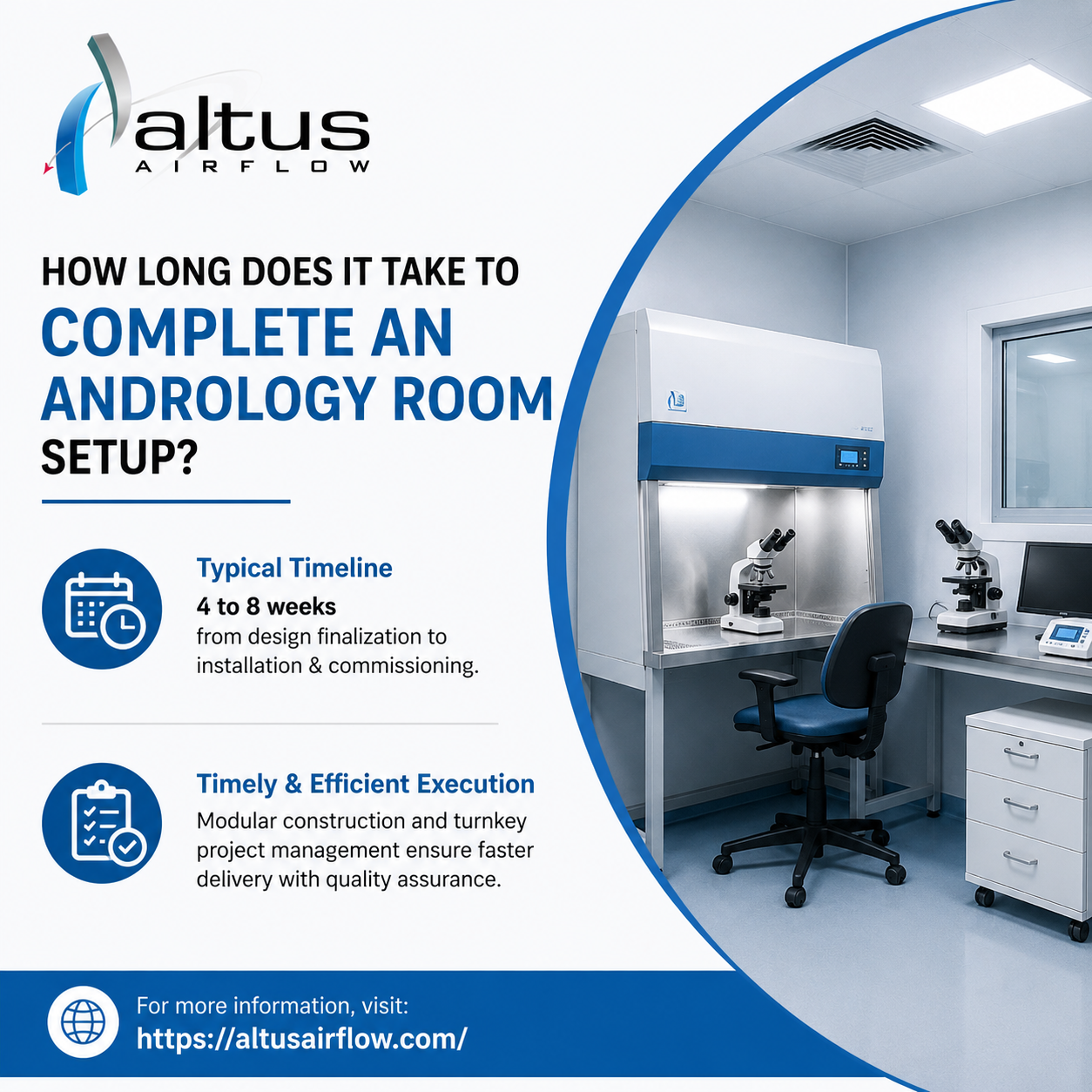
- 4 to 8 weeks
Projects with minimal structural modifications may be completed more quickly.
Medium-Sized Laboratory Setup Timeline
Medium-scale facilities generally require additional planning and infrastructure work.
Typical duration:
- 8 to 12 weeks
This timeline includes installation, validation, and commissioning activities.
Large Andrology Laboratory Setup Timeline
Large laboratories with advanced capabilities require longer schedules.
Typical duration:
- 12 to 20 weeks or more
Complex projects often involve additional regulatory and technical requirements.
Benefits of Working with Specialized Setup Experts
Partnering with professionals helps accelerate project completion.
Advantages include:
- Better planning
- Reduced delays
- Improved coordination
- Higher quality outcomes
Expert project management improves efficiency.
How Project Management Reduces Delays
Effective project management ensures smooth execution.
Key benefits include:
- Timeline monitoring
- Resource coordination
- Risk management
- Quality control
Proper oversight supports timely delivery.
Future Trends in Andrology Laboratory Development
Modern laboratories increasingly adopt advanced technologies.
Emerging trends include:
- Automation systems
- Smart monitoring platforms
- Digital workflow management
- Energy-efficient infrastructure
These innovations may further streamline future projects.
Conclusion
Working with an experienced Andrology Room Setup Company helps healthcare providers streamline every stage of the project, from design and engineering to installation and commissioning. Companies such as Altus Airflow specialize in delivering high-quality andrology laboratory solutions that prioritize efficiency, compliance, and performance. By partnering with trusted experts like Altus Airflow, fertility clinics and healthcare facilities can establish reliable laboratory environments that support long-term clinical success.
FAQs
1. How long does an Andrology Room Setup Company take to complete a laboratory project?
An Andrology Room Setup Company typically completes projects within 4 to 20 weeks, depending on the size, complexity, equipment requirements, and infrastructure needs of the laboratory.
2. What factors affect the setup timeline?
Project size, equipment lead times, approvals, facility condition, and customization requirements can influence timelines.
3. How long does HVAC installation take in an andrology room?
HVAC installation generally takes one to three weeks depending on system complexity.
4. Why is validation important before laboratory operation?
Validation ensures that environmental systems and equipment perform according to required standards.
5. Can modular construction reduce setup time?
Yes, modular construction often shortens project timelines through off-site manufacturing and faster installation.
Read Our Previous Blog —————> What equipment is included in modular cardiac OT setups?