Pigeons nesting under solar panels is one of those problems that sneaks up on people fast. This one covers why it happens, what it actually costs you if ignored, and the methods that actually work, including pigeon spikes for roof areas, to keep birds out from under your panels for good.
Why Solar Panels Are Basically a Pigeon Paradise
Honestly, solar panels are kind of perfect for pigeons if you think about it from their side. There’s a gap underneath, usually a few inches, shaded, dry, protected from wind and rain, and completely out of reach for most predators. It’s basically a built-in shelter that nobody intended to build but ended up being exactly what these birds want.
Once a pair finds that space and decides it’s safe, they’ll nest there, and more birds tend to follow once word gets around, so to speak. I’ve talked to homeowners who installed panels and had zero bird problems for the first year, then suddenly there’s a whole colony living under there by year two. It doesn’t take long once they find the spot.

What Actually Happens When Pigeons Move In
The droppings are the obvious issue, but it goes further than just mess. Acidic droppings sitting under panels for months can actually corrode the mounting hardware and wiring connections over time, which is a bigger deal than people realize until a panel starts underperforming for no clear reason. Nesting material, feathers, twigs, all that stuff can also block airflow under the panels, and panels that run hotter actually produce less energy, so there’s a real performance hit involved here too.
Then there’s the fire risk angle, which doesn’t get talked about enough. Dry nesting material packed up against electrical wiring under a panel is not a great combination, especially somewhere hot and dry for long stretches of the year. On top of all that, getting pigeons and their nests removed later means pulling panels or accessing tight gaps, which costs way more than just preventing it in the first place would’ve.
Mesh Skirting Is the Go-To Fix
The most common and honestly most effective solution is installing mesh or wire skirting around the perimeter of the panel array. This closes off that gap underneath completely, so birds can’t get in to begin with. It’s usually a galvanized or stainless steel mesh, flexible enough to fit the slight curve or angle of most panel setups without looking too bulky from the ground.
A good mesh installation should wrap the entire perimeter, not just the front-facing edge, because pigeons are persistent and will find whatever gap got missed. It’s a one-time job for the most part, and once it’s on there, it basically eliminates the problem entirely without needing anything else layered on top of it.
DIY Mesh Installation vs Hiring It Out
For smaller residential systems, mesh installation is honestly doable yourself if you’re comfortable on a ladder and have basic tools. The mesh usually comes in rolls, you cut it to size, and secure it with clips or cable ties along the panel frame edges. Takes an afternoon for most average-sized roofs, give or take.
Bigger commercial installations or steep roofs are a different story though, and that’s where paying a solar maintenance company or pest control service makes more sense. They’ve got the right harness setup, they know panel systems well enough not to damage wiring while installing mesh, and honestly the cost isn’t that bad considering what removal later would run you.
Pigeon Spikes Can Work Around the Edges Too
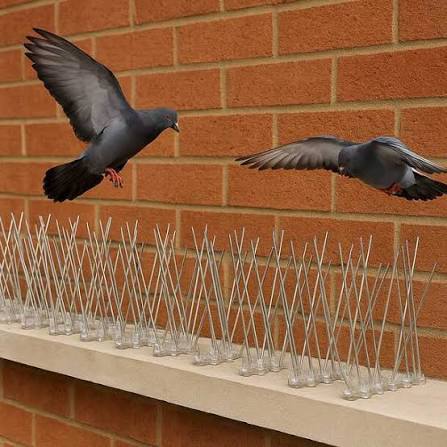
While mesh handles the main gap problem, pigeon spikes still have a role here, particularly on any exposed ledges or mounting rails near the panel array. If pigeons are landing on nearby railings or flat sections of roof before attempting to get under the panels, spikes on those spots add another layer of deterrent before they even get close to the gap.
It’s not usually the primary fix for under-panel nesting specifically, mesh does the heavier lifting there, but combining the two gives more complete coverage overall. Spikes on the approach points, mesh sealing the actual space — together they make your roof a lot less appealing than leaving either one out would.
Timing Matters More Than People Think
One thing a lot of homeowners get wrong is waiting too long to install prevention measures. If pigeons have already nested and there are eggs or chicks under there, you generally can’t just rip everything out, depending on local wildlife regulations. Some areas protect active nests, meaning you have to wait until the birds naturally leave before sealing anything up, which can drag the whole process out by weeks.
The best time to install mesh or any prevention is actually before installation even finishes, or right after panels go up, before pigeons have had a chance to scope the place out. If you’re already seeing birds investigating the area, that’s your window to act fast before they commit to nesting there.
Signs You Might Already Have a Problem
Cooing sounds coming from under the panels is usually the first giveaway, especially early mornings. Droppings accumulating on the ground directly below the array is another obvious sign, along with feathers or small twigs scattered nearby. If you’re noticing your energy output dipping slightly without an obvious reason, it’s worth actually checking under there, since blocked airflow from nesting debris can genuinely affect panel efficiency.
Don’t ignore these signs thinking it’ll sort itself out, because it really won’t. Pigeons don’t relocate on their own once they’ve settled somewhere comfortable, the problem just grows the longer it sits there unaddressed.
Cleaning Up Before You Seal Anything Off
If birds have already been under there a while, you can’t just slap mesh on top and call it done. The space needs to be cleared out first, nests removed, droppings cleaned, any damaged wiring or hardware inspected for corrosion damage. This part’s honestly better left to a professional, partly for safety and partly because disturbing an active nest without knowing the local regulations can land you in trouble depending on where you live.
Once everything’s cleared and the area’s properly cleaned, that’s when mesh installation should happen, sealing the space before any new birds get the idea to move back in. Skipping the cleanup step and going straight to sealing just traps old nesting debris under there, which isn’t great for panel performance either.
Why Regular Roof Checks Matter After Installing Protection
Even with mesh and spikes in place, it’s worth doing a quick visual check every few months, especially after storms. Mesh can occasionally shift or tear from wind, heavy rain can loosen clips over time, and finding a small gap early beats finding a new pigeon colony that exploited it for six months without you noticing.
It doesn’t need to be a big production, just a walk around the panel array checking the mesh is intact and nothing’s come loose. Catching a small issue early is way less hassle than dealing with birds that got back in and started nesting all over again.

Cost Comparison: Prevention vs Dealing With It Later
Mesh installation on an average residential solar setup typically runs a fraction of what cleanup and panel servicing costs if pigeons get established first. Add in potential energy losses from reduced panel efficiency, possible wiring damage, and the labor involved in professional removal services, and prevention ends up being the clearly cheaper route almost every time.
It’s one of those situations where spending a bit upfront saves a lot more down the line, both in money and in just the hassle of dealing with an active infestation under panels that are genuinely annoying to access in the first place.

Conclusion
At the end of the day, keeping pigeons out from under your solar panels really comes down to closing off that gap before birds find it appealing in the first place. Mesh skirting does most of the heavy lifting, and pairing it with Pigeon Spikes on nearby ledges or rails gives you even more complete coverage. It’s a small investment compared to what removal, cleaning, and potential panel damage would cost you if the problem’s left to grow on its own.