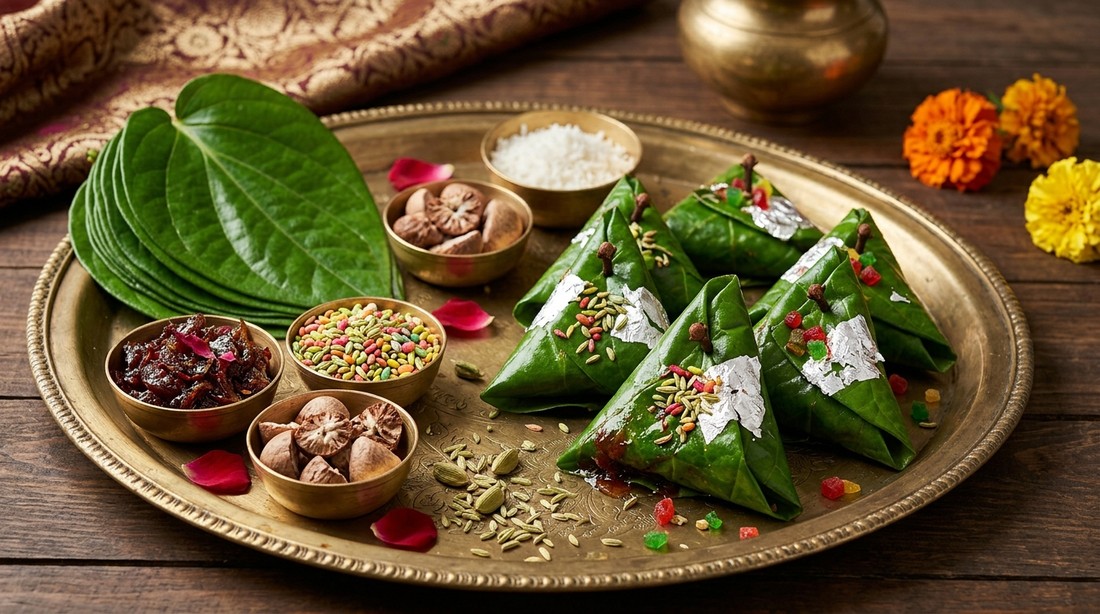
Paan is a traditional preparation enjoyed across South Asia for its distinctive taste, cultural importance, and variety of ingredients. It commonly consists of a betel leaf filled with selected ingredients such as areca nut, spices, sweeteners, and other flavouring components. Recipes vary by region, family tradition, and personal preference.
From traditional paan to sweet paan served at weddings and celebrations, different varieties offer different tastes and textures. Some preparations focus on the natural character of betel leaves, while others include sweet fillings, colourful toppings, or additional ingredients.
Understanding the types of paan, their ingredients, and their cultural background can help people appreciate this long standing tradition. It is also important to understand the health risks associated with betel quid ingredients, particularly areca nut and tobacco.

What Is Paan?
Paan is a preparation traditionally made by folding a betel leaf around a selection of fillings. The leaf provides the outer layer, while the ingredients inside determine the taste, texture, and overall character of the preparation.
Common ingredients may include areca nut, slaked lime, catechu, cardamom, fennel seeds, coconut, sweeteners, and other flavouring ingredients. Not every preparation contains all these components.
Some varieties are prepared without tobacco, while others may include tobacco products. Ingredients can differ significantly between vendors and regions, so checking the composition is important.
Paan has a long history in South Asian food traditions and social customs. It is associated with hospitality, celebrations, weddings, and gatherings. However, traditional use does not mean that every variety is safe for consumption.
Popular Types of Paan
Paan comes in several varieties, each prepared according to different tastes and traditions. The names used by sellers may vary, and recipes are not always standardized.
Traditional Paan
Traditional paan generally uses a betel leaf with selected ingredients that create a distinctive, spicy, earthy, or mildly bitter taste.
Depending on the recipe, fillings may include areca nut, lime, catechu, and spices. Some versions are prepared with tobacco, while others are tobacco free.
Traditional paan is often associated with established regional customs. When comparing products, review the ingredient list rather than relying only on the variety name.
Meetha Paan
Meetha paan is a sweet variety often served after meals or during celebrations. Its fillings may include sweetened coconut, candied ingredients, fennel seeds, cardamom, and other flavouring components.
Some preparations also include areca nut or other ingredients associated with health risks. The word meetha refers to its sweet taste, not necessarily to its safety.
Sweet paan is commonly presented as a colourful preparation, particularly at weddings, family gatherings, and festive occasions. Ingredients and sweetness levels differ from one recipe to another.
Sada Paan
Sada paan generally refers to a simpler preparation with fewer sweet ingredients. Depending on local usage, it may contain betel leaf, areca nut, lime, catechu, and other traditional components.
The exact recipe is not universal. Buyers should ask sellers what the product contains, especially when the name does not provide a complete ingredient description.
Banarasi Paan
Banarasi paan is associated with Varanasi, India, and is known for its regional preparation traditions. Different recipes may combine betel leaves with spices, sweet fillings, and other ingredients.
The preparation can vary depending on the vendor and the style being offered. Some versions are sweet, while others follow a more traditional flavour profile.
Its reputation reflects a distinctive culinary and cultural tradition rather than a single standardized recipe.
Calcutta Paan
Calcutta paan refers to styles associated with Kolkata and surrounding regional traditions. The preparation may feature particular betel leaves and combinations of fillings.
Some sellers offer sweet versions, while others prepare paan with more traditional ingredients. As with other regional varieties, the name alone does not confirm the complete recipe.
Chocolate Paan
Chocolate paan is a modern variation that combines a betel leaf with chocolate based fillings or toppings. Some recipes also include coconut, sweetened ingredients, or other confectionery components.
It is often offered as a novelty item at events and celebrations. The sweetness and presentation may appeal to people who prefer dessert style flavours.
However, chocolate paan can still contain other ingredients that affect its safety. Check the complete composition rather than assuming that a dessert style preparation is harmless.
Fire Paan
Fire paan is a theatrical presentation in which a vendor briefly ignites the preparation before serving it. It is sometimes promoted at food stalls and special events.
The performance can involve an open flame and requires careful handling. It should only be performed by trained vendors using appropriate precautions.
The visual presentation does not make the ingredients safer. The same considerations regarding areca nut, tobacco, and other components still apply.
Common Ingredients Used in Paan
The ingredients used in paan determine its taste, texture, appearance, and potential health effects.
Betel Leaf
The betel leaf forms the outer layer of many paan preparations. It has a distinctive herbal taste and is folded around the selected fillings.
Betel leaf is botanically different from the areca nut, although both are commonly discussed in relation to paan. Their properties and health implications should not be confused.
Areca Nut
Areca nut is commonly used in traditional paan and is sometimes called betel nut. Despite the common name, it comes from the areca palm rather than the betel vine.
Areca nut is associated with serious health risks. The International Agency for Research on Cancer classifies areca nut as carcinogenic to humans. Its use is linked to oral cancer and other oral health problems, even when tobacco is absent.
Avoiding areca nut is the safest choice for reducing these risks.
Slaked Lime
Slaked lime, also known as calcium hydroxide, is used in some traditional preparations. It changes the chemical environment of the mixture and can affect how other ingredients release their compounds.
It is a caustic substance and can damage tissues if handled or used improperly. Its presence is another reason to understand the actual composition of a paan product.
Catechu
Catechu is a plant derived ingredient used in some traditional paan recipes. It contributes colour and a characteristic taste.
The amount and preparation method can vary between products. It is often combined with other ingredients rather than used alone.
Fennel Seeds and Cardamom
Fennel seeds and cardamom are common flavouring ingredients in sweet paan and other regional varieties. They contribute distinctive flavours and may be combined with coconut or sweetened fillings.
Their presence does not cancel out the risks associated with areca nut or tobacco if those ingredients are also included.
Sweeteners and Coconut
Sugar, sweetened coconut, and candied ingredients may be used in meetha paan. They create a sweeter taste and can contribute different textures.
The quantity of sweeteners varies by recipe. People monitoring their sugar intake may wish to review the ingredients before choosing a sweet preparation.
Tobacco
Some paan products contain tobacco, while others do not. Tobacco exposure increases the risk of several serious diseases, including cancers of the mouth.
Products containing tobacco should be avoided. A product described as traditional, herbal, or natural should not be assumed to be safe without checking its ingredients.
Paan in South Asian Culture
Paan has cultural significance in Pakistan, India, Bangladesh, and other communities with South Asian traditions. It has appeared in social customs, hospitality practices, and celebrations for generations.
Weddings and Family Events
Paan is sometimes served at weddings and family gatherings. Special presentation styles may include decorated trays, carefully folded leaves, and a selection of sweet fillings.
The preparation can form part of the event’s food service and traditional hospitality. Hosts may choose different varieties according to guest preferences.
Hospitality and Social Gatherings
In some communities, offering paan has historically been associated with welcoming guests. It may be served alongside tea or other refreshments during social visits.
These practices vary across families and regions. Modern gatherings may offer alternative sweets or refreshments for guests who prefer not to consume paan.
Regional Traditions
Different areas have developed their own preparation methods, ingredient combinations, and serving styles. Regional names often refer to local preferences rather than fixed recipes.
This diversity contributes to paan’s cultural identity. Understanding regional traditions can also help people recognize why products with similar names may contain different ingredients.
How to Evaluate Paan Products
If you are considering a paan product for an event or culinary presentation, review its ingredients and preparation details carefully.
Read the Ingredient Information
Check whether the product contains betel leaf, areca nut, tobacco, sweeteners, or other components. Ask the seller for clarification when ingredients are not clearly listed.
Do not rely on descriptions such as natural, traditional, or sweet to determine safety.
Consider Freshness and Handling
Fresh betel leaves can deteriorate when exposed to unsuitable storage conditions. For food preparation, clean handling and appropriate storage help reduce contamination risks.
For packaged products, review the packaging condition, production details, and storage instructions. Avoid products with unclear ingredients or signs of spoilage.
Understand the Preparation Style
Ask whether the paan is traditional, sweet, regional, or dessert inspired. This helps clarify the intended taste and presentation.
However, preparation style alone cannot establish whether a product is safe. Ingredient information remains essential.
Choose Suitable Alternatives
For events, consider alternatives that provide a similar presentation without areca nut or tobacco. Sweet leaf inspired desserts, coconut based confectionery, cardamom sweets, and other traditional treats can offer guests a wider selection.
If a product contains areca nut, choosing a different preparation without it is the safer option.
Health Risks Associated With Paan
Paan is often discussed as a traditional preparation, but some common ingredients pose significant health risks.
Areca nut is carcinogenic to humans and is associated with oral cancer and oral submucous fibrosis, a condition that can cause stiffness in the mouth and restrict opening. Tobacco containing preparations add further risks.
These dangers are not eliminated by using sweeteners, spices, or betel leaves. Tobacco free paan may still be harmful if it contains areca nut.
People who currently use paan products and experience persistent mouth ulcers, white or red patches, burning sensations, difficulty opening the mouth, or unexplained oral changes should seek assessment from a qualified healthcare professional.
The safest way to avoid the risks associated with areca nut and tobacco is not to use products containing them.
Final Thoughts on Paan
Paan represents a diverse South Asian tradition with many regional preparations, flavour combinations, and cultural associations. Traditional paan, meetha paan, Banarasi paan, Calcutta paan, and modern dessert inspired varieties can differ considerably in their ingredients and presentation.
Understanding those differences is useful when evaluating products for personal or event use. Read ingredient labels, ask sellers about unclear components, and pay attention to safe food handling.

Most importantly, cultural significance should not be confused with health safety. Avoiding areca nut and tobacco is the safest choice, even when a preparation is described as sweet, traditional, or natural.