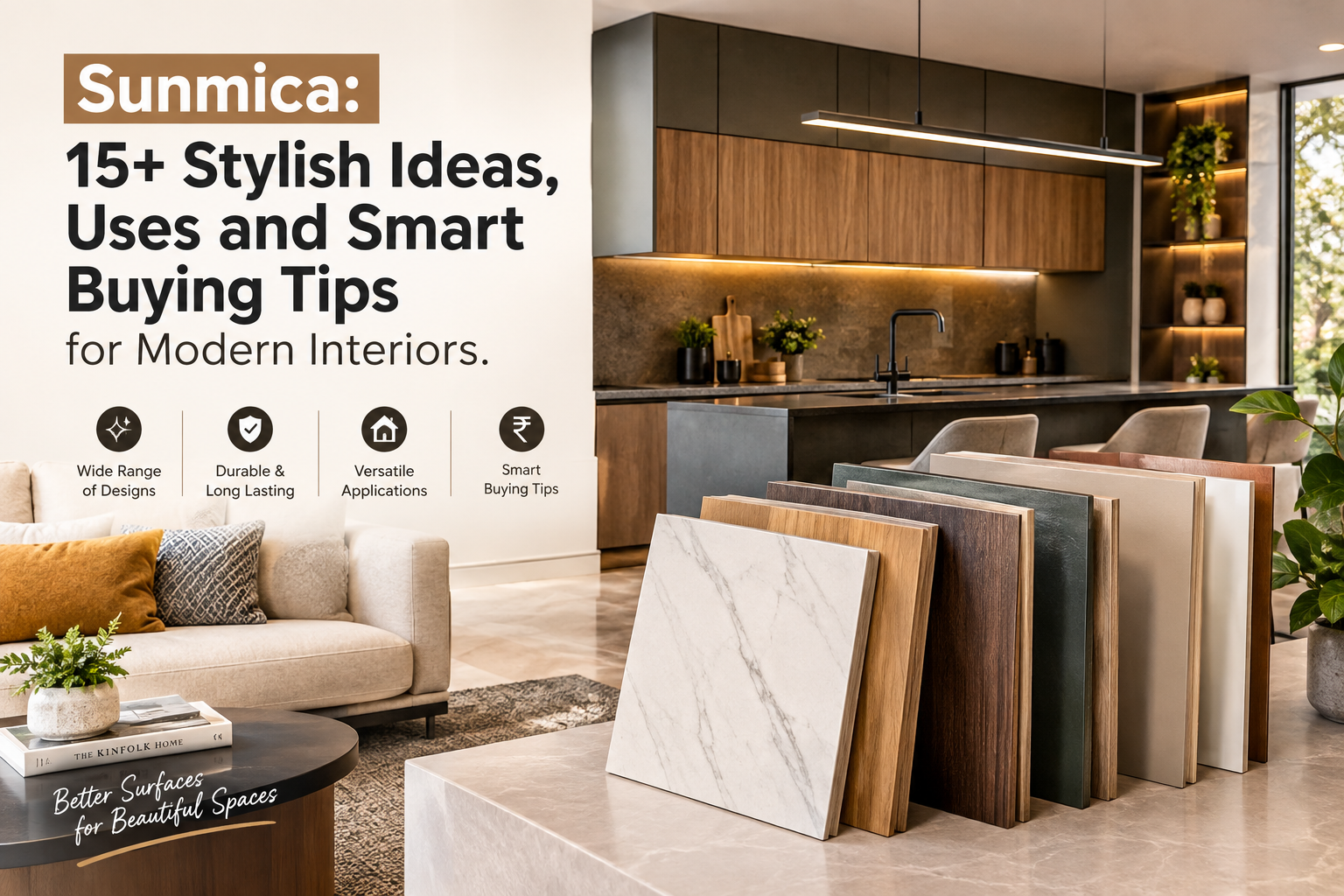
In today’s time Sunmica has been a familiar name in Indian interiors for decades. From kitchen cabinets and wardrobes to study tables, office furniture and TV units, it has become a practical way to add colour, texture and character to furniture surfaces. Today, the choices have moved far beyond traditional wood patterns. Modern collections include solid colours, marble-inspired designs, high-gloss surfaces, matte textures, metallic finishes and many other contemporary styles.
For anyone planning new furniture, selecting the best laminate isn’t simply about finding a colour that looks attractive in a catalogue. We also need to consider the room, lighting, furniture design, surface finish, maintenance requirements and how the furniture will be used every day. When these details are considered together, Sunmica can help create interiors that look polished without making the design unnecessarily complicated.
What Is Sunmica?
Sunmica is a commonly used term in India for decorative laminate sheets used on furniture and interior surfaces. The material is generally manufactured by combining decorative paper layers with resin and pressing them under controlled heat and pressure to create a finished decorative surface.

The top layer provides the visible colour, pattern or texture. This is what gives furniture its final appearance. Depending on the product, laminates can be available in different thicknesses, surface finishes and performance specifications.
Sunmica is usually applied over a suitable substrate such as plywood, MDF or another compatible board. Once properly bonded and finished, the panel can be used for a wide variety of interior applications.
The term “Sunmica” is often used conversationally in India when people are referring to decorative laminates in general. In professional interior projects, however, it is useful to check the actual product specification, manufacturer, thickness and intended application before making a selection.
Why Is Sunmica Popular for Modern Interiors?
The popularity of Sunmica comes largely from its design flexibility. Furniture doesn’t have to look the same from one room to another. We can choose a warm woodgrain for a bedroom wardrobe, a soft matte colour for kitchen cabinets and a stone-inspired design for a living room feature unit.
There are several practical reasons for its continued use:
- Wide design variety: Available in colours, patterns, textures and finishes for different interior styles.
- Furniture versatility: Suitable options are available for wardrobes, cabinets, tables, storage units and other furniture applications.
- Easy design coordination: Different designs can be combined to create two-tone and multi-finish furniture.
- Contemporary finishes: Modern collections go beyond traditional wood patterns.
- Simple maintenance: Properly selected and installed surfaces can be relatively easy to clean during everyday use.
- Design consistency: Matching or complementary designs can be used across multiple furniture pieces.
This variety gives architects, interior designers, contractors and homeowners considerable freedom when developing a furniture scheme.
Sunmica vs Laminate: Are They Different?
This is one of the most common questions people have when searching for furniture surfaces.
In everyday Indian usage, Sunmica is often used as a general term for decorative laminate sheets. Technically, however, “Sunmica” originated as a brand name and is now frequently used colloquially to describe laminates.
The broader category is decorative laminate. Different manufacturers offer their own collections under different brand names, with variations in design, construction, finish, thickness and technical characteristics.
So, when comparing products, it is better to look beyond the word “Sunmica” and check the actual laminate specifications. This is especially important for large furniture projects where surface performance and application suitability matter as much as appearance.
Popular Sunmica Designs for Modern Furniture
Modern interior design has opened the door to a much wider range of decorative surfaces. The right design can completely change the appearance of a piece of furniture without changing its basic structure.
Solid Colour Sunmica
Solid colours are a strong choice for minimalist furniture. White, cream, beige and grey can create a calm and clean appearance, while darker shades such as charcoal, navy, forest green and brown can introduce depth.
A solid colour can also serve as a supporting surface when another laminate carries a stronger pattern.
For example, a woodgrain cabinet can be paired with a plain beige or grey surface. This keeps the furniture interesting without allowing too many patterns to compete.
Wood Finish Sunmica
Wood finish Sunmica remains one of the most widely used options for residential interiors.
Modern woodgrain designs can recreate the visual character of oak, walnut, teak, ash and other timber styles. Light wood finishes can give a room a relaxed and airy feeling, while darker grains can create a more traditional or luxurious appearance.
Wood finish laminates work particularly well for:
- Wardrobes
- Kitchen cabinets
- TV units
- Study tables
- Bookshelves
- Office desks
- Storage cabinets
The important thing is to select a woodgrain that complements the existing flooring and furniture rather than trying to match every wooden surface exactly.
Marble and Stone Finish
Marble and stone-inspired laminates have become popular for contemporary furniture. They can introduce subtle veins, natural-looking patterns and neutral shades to cabinet surfaces.
White marble patterns can create a bright appearance, while grey and beige stone designs can provide a more grounded look.
These designs work well for TV units, kitchen cabinetry, sideboards and feature furniture where we want the surface to become a visual focal point.
High-Gloss Sunmica
High-gloss finishes create a reflective surface that can give furniture a sleek and contemporary appearance.
They are commonly considered for modern kitchens, wardrobes, display cabinets and selected living-room furniture.
Light-coloured gloss finishes can also reflect surrounding light. However, fingerprints and smudges can be more visible on reflective surfaces, so regular cleaning becomes more important.
Matte Sunmica
Matte finishes have a softer appearance and are especially suitable for modern minimalist interiors.
They work well with clean cabinet profiles and simple hardware. Soft beige, grey, white, muted green and other understated colours can create an elegant appearance without excessive shine.
Matte surfaces can also be paired with woodgrain or metallic accents for contrast.
Textured Sunmica
Texture adds depth to a furniture surface. Depending on the collection, textured laminates can provide visual or tactile effects inspired by wood, fabric, stone and other materials.
They are useful when we want to create interest without depending on bold colours.
A textured laminate can also be combined with a plain matte surface, allowing different parts of the same furniture unit to have distinct visual roles.
Metallic Sunmica
Metallic finishes can add a contemporary accent to interiors. Gold, silver, bronze, copper and other metallic-inspired surfaces can be used selectively on cabinets, panels or furniture details.
Because metallic surfaces can attract attention quickly, they often work better as accent elements rather than covering every piece of furniture in a room.
Best Sunmica Colours for Different Rooms
Colour selection should always consider the size, lighting and purpose of the room. There isn’t one universal colour that works for every interior.
Sunmica for Living Rooms
Living rooms often have several visual elements, including sofas, curtains, flooring, wall treatments, lighting and decorative pieces.
Neutral Sunmica shades such as beige, cream, white, taupe and grey can work well as a foundation. Woodgrain surfaces can then introduce warmth.
For a feature TV unit, we can consider a stone-inspired design, dark woodgrain or a contrasting solid colour.
Sunmica for Bedrooms
Bedrooms generally benefit from calm and comfortable colour combinations.
Light wood, beige, cream, muted grey and soft pastel shades can create a relaxed appearance. For wardrobes, subtle woodgrain or matte finishes are practical choices when we want the furniture to blend naturally into the room.
Darker colours can also be used, particularly in larger bedrooms with sufficient natural or artificial lighting.
Sunmica for Kitchens
Kitchen cabinetry is one of the most common applications for decorative laminates.
White, beige, grey, woodgrain and darker neutral finishes can all be used depending on the kitchen layout.
For a modern two-tone kitchen, we can combine a lighter upper cabinet with darker lower units. Another approach is to use woodgrain on tall units and a solid colour on the main cabinetry.
The countertop and backsplash should also be considered before finalising the cabinet laminate.
Sunmica for Offices
Office furniture generally benefits from practical, professional-looking finishes.
Grey, white, beige, brown and woodgrain surfaces can create a clean environment. Reception areas and meeting rooms offer more scope for stone, textured or metallic accents.
For workstations and desks, we should also check that the selected laminate is appropriate for the intended application and expected daily use.
How to Choose the Best Laminate for Your Furniture
Choosing the best laminate involves more than selecting the most attractive design in a catalogue.
1. Consider the Furniture Type
A wardrobe, kitchen cabinet and office desk have different requirements. The laminate should be suitable for the intended furniture application.
2. Check the Thickness
Different applications may call for different laminate thicknesses. A commonly used option for visible furniture surfaces is 1mm laminate, while other thicknesses may be suitable for specific applications.
Always check the manufacturer’s recommendations.
3. Select the Right Finish
Matte, gloss, textured and other finishes create different visual effects.
We should choose a finish based on both appearance and maintenance expectations.
4. Consider the Room Lighting
Natural daylight, warm lighting and cool artificial lighting can affect how a colour appears.
Whenever possible, we should check a physical sample in the actual room.
5. Look at the Complete Colour Palette
Don’t choose the furniture laminate in isolation. Compare it with:
- Flooring
- Walls
- Countertops
- Backsplash
- Curtains
- Upholstery
- Hardware
- Existing furniture
A good combination doesn’t necessarily mean matching everything. Contrast can often make an interior more interesting.
Sunmica for Kitchen Cabinets
Kitchen cabinets need to look attractive while coping with frequent daily use.
When selecting a kitchen laminate, we should consider the cabinet layout and surrounding materials. Matte finishes can provide a subtle appearance, while gloss finishes can create a more reflective look. Woodgrains can add warmth, and solid colours can support a minimalist design.
For a compact kitchen, lighter shades may help maintain a brighter visual environment. In larger kitchens, darker colours and stronger patterns can be introduced more confidently.
We should also pay attention to cabinet edges and joints. A high-quality surface can still look poorly finished if the installation and edge treatment aren’t done properly.
Sunmica for Wardrobes
Wardrobes occupy a substantial amount of wall space, making their finish an important part of bedroom design.
Light woodgrain can complement a natural, relaxed interior. Matte beige or grey can suit a modern bedroom, while darker woodgrain can provide a richer appearance.
For children’s rooms or more playful spaces, pastel or brighter solid colours can be introduced.
Sliding wardrobes can also benefit from contrasting laminate combinations. For example, a central panel can feature a woodgrain or textured surface while the surrounding panels use a neutral solid colour.
Sunmica for TV Units and Living Room Furniture
A TV unit often acts as a visual anchor in a living room. This makes it an ideal place to combine different laminate designs.
A popular approach is to use a neutral solid colour for the main cabinet and introduce woodgrain, stone or textured laminate on a feature panel.
We should avoid using too many strong patterns around the television because the screen itself already provides a strong visual focus.
Simple combinations usually age better than designs that depend entirely on short-lived trends.
Sunmica for Office Furniture
Office furniture needs to balance appearance and everyday functionality.
Woodgrain laminates can create a warm professional environment, while grey and neutral solid colours can give offices a clean contemporary appearance.
For reception desks, conference tables and executive furniture, darker woodgrains, stone-inspired finishes or carefully used metallic accents can create a more distinctive appearance.
In shared workspaces, neutral surfaces are often easier to coordinate with different chairs, storage systems and office accessories.
How a Laminate Catalogue Helps with Selection
A detailed laminate catalogue can make the selection process much easier, particularly when there are many designs to compare.
A good catalogue allows us to organise products according to:
- Colour
- Design
- Finish
- Texture
- Thickness
- Application
- Product code
- Collection
For architects and interior designers, catalogues are particularly useful when presenting options to clients. Instead of discussing colours only through verbal descriptions, we can compare specific designs and narrow down the final selection.
Digital catalogues are convenient for initial research, while physical samples remain useful for confirming colour and texture before production.
How to Maintain Sunmica Surfaces
One of the practical benefits of laminate furniture is that routine maintenance is relatively straightforward.
For everyday cleaning, we should use a soft, clean cloth and an appropriate mild cleaning solution. Dust and spills should be removed regularly.
We should avoid:
- Abrasive scrubbers
- Harsh chemicals
- Excessive water
- Sharp objects dragged across the surface
- Unapproved cleaning products
The edges and joints deserve particular attention because prolonged moisture exposure can affect the underlying substrate if the furniture isn’t properly constructed or sealed.
Following the manufacturer’s care recommendations is the safest approach because different surface finishes can have specific maintenance requirements.
Common Mistakes to Avoid When Choosing Sunmica
Even a beautiful laminate can look out of place when it isn’t properly coordinated with the rest of the interior.
Choosing Only from a Screen
Digital images can vary depending on the device and display settings. Physical samples are useful before making a final selection.
Ignoring Lighting
A colour can look different under daylight, warm LEDs and cool white lighting. Always consider the actual lighting environment.
Using Too Many Patterns
Combining woodgrain, marble, bold colours, textures and metallic finishes in one small space can make the design feel crowded.
Ignoring the Countertop
In kitchens, cabinet laminate and countertop should be considered together.
Selecting Only by Price
Price is one consideration, but application suitability, finish, construction quality and technical specifications should also be reviewed.
Forgetting Long-Term Appeal
Trendy colours can be attractive, but large furniture pieces may remain in a home for many years. We should consider whether the selected design will continue to suit the room over time.

For writing best article for your website you can usamagaznie website.