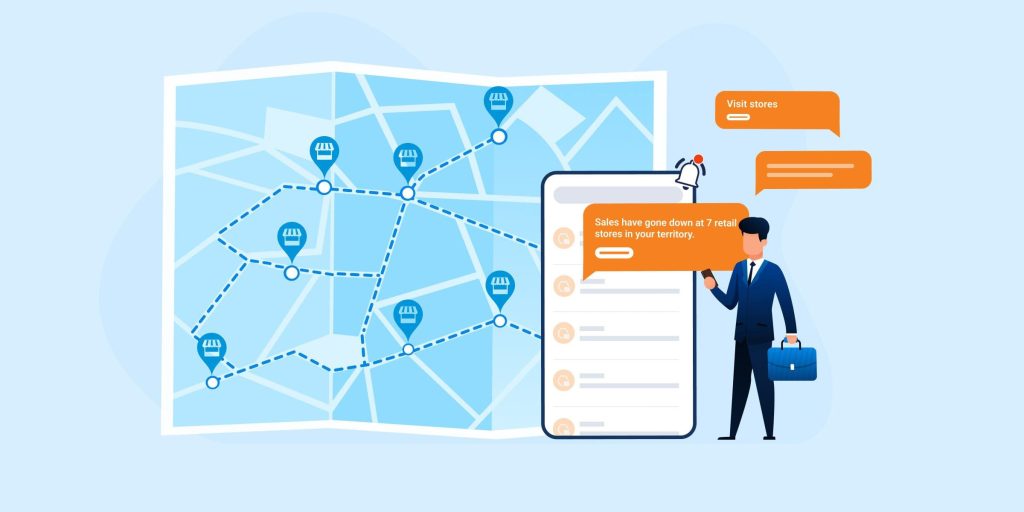
Brand coverage is not just about getting your product onto shelves. It is about making sure the right products are available in the right places, visited by the right people, at the right frequency. This is the real work of territory servicing — and for most consumer goods and distribution businesses, it is also one of the most difficult parts of operations to manage well. When it works, your brand grows steadily across every market you operate in. When it does not, you lose shelf space, retailer relationships, and revenue — often without even noticing until the damage is deep.
Rholab plays a direct role in strengthening territory servicing by combining field-level coordination, structured visit planning, and real-time performance tracking to improve market coverage. By organizing retail visits more effectively and ensuring that field teams are focused on high-impact outlets, Rholab helps brands maintain consistent presence and execution across all assigned territories.
With better visibility into what is happening on the ground, brands can identify coverage gaps, improve outlet servicing frequency, and ensure that priority markets receive the attention they require. This structured approach allows Rholab to turn territory servicing from a reactive field activity into a planned, measurable, and performance-driven function that supports long-term distribution growth.

What Territory Servicing Really Involves
Territory servicing is the structured process of managing, visiting, and maintaining relationships with retail outlets within a defined geographic area. It includes regular store visits by field sales representatives, ensuring product availability and correct shelf placement, gathering market intelligence, and building long-term relationships with retail partners.
On paper, it sounds straightforward. In practice, it is one of the most complex and resource-intensive parts of running a distribution or consumer goods business. Each territory contains dozens or sometimes hundreds of retail accounts, all with different needs, visit schedules, and order patterns. Managing this at scale without a proper system means field teams operate inconsistently, priority accounts get missed, and no one in the office has a clear picture of what is actually happening on the ground.
The Hidden Cost of Poor Territory Coverage
Most businesses understand that poor territory servicing leads to lost sales. What is less often discussed is the compounding nature of that loss. When a retail outlet is not visited regularly, it does not just mean one missed order. It means reduced shelf space as competitors fill the gap, weakened relationships with store owners, and eventually a shift in retailer loyalty that is very hard to reverse.
There is also a team productivity cost. Without clear territory assignments and performance expectations, field representatives often gravitate toward the accounts they are most comfortable with, leaving new or challenging outlets underserved. This creates an invisible imbalance — some areas of your market are over-serviced while others are practically abandoned. The business continues to operate, but its growth potential is being quietly undermined.
This is exactly why retail performance reporting at the territory level is so important. Without data showing visit frequency, order conversion rates, and coverage gaps by zone, leadership teams are essentially making decisions blind.
How Rholab Structures Territory Management
Rholab approaches territory servicing as a system, not a task. The platform allows businesses to define territories clearly, assign field representatives to specific accounts and zones, and set visit schedules based on account priority. A high-value retail partner might require weekly visits, while smaller accounts can be scheduled bi-weekly or monthly. This structure ensures that every account receives the right level of attention based on its commercial importance.
Field representatives use Rholab’s mobile interface to log their visits, record orders, update account information, and capture any issues or feedback from the store. This real-time data entry means that by the time a rep finishes their route for the day, their managers already have a complete picture of what happened in the field. There are no delays, no missing information, and no reliance on memory or manual notes.
Real-Time Retail Performance Reporting That Drives Decisions
One of the most powerful aspects of Rholab is how it connects field activity directly to retail performance reporting. Every store visit, every order logged, and every coverage gap identified by a field representative feeds instantly into the reporting layer. Managers can open their dashboard at any point during the day and see exactly which territories are on track and which need attention.
This level of retail performance reporting changes how management teams operate. Instead of waiting for weekly summaries or end-of-month reports, they can identify problems as they happen and respond immediately. If a field rep has not completed their planned visits for the day, a manager can follow up in real time. If a particular territory shows three consecutive weeks of declining order conversion, the data makes that trend visible early enough to investigate and correct it.
Rholab’s retail performance reporting also supports strategic decisions. When leadership can see historical performance by territory, product category, and sales representative, they have the foundation they need to make informed decisions about territory restructuring, team allocation, and market expansion.
Maximizing Brand Coverage Through Consistent Execution
Brand coverage is ultimately a result of consistent execution across every territory. A great product with strong demand can still underperform in the market if the field execution behind it is inconsistent. Shops run out of stock because visits are irregular. New product launches fail to gain traction because retail staff were never briefed properly during in-store visits. Competitor brands gain shelf dominance simply because their field teams show up more reliably.
Rholab addresses this by making consistency measurable. When territory servicing activity is tracked, reported, and reviewed regularly, it becomes a standard that teams are accountable to. Field representatives know that their visit records, order logs, and account notes are visible to their managers. This transparency naturally drives better execution, not because of pressure, but because everyone is working from the same information and toward the same goals.
Why Rholab Is the Right Platform for Territory-Led Growth
Rholab is not just a reporting tool or a field management app. It is a complete operating platform for businesses that want to grow through disciplined, data-driven territory servicing. It connects the people in the field with the people making decisions in the office, and it turns the day-to-day activity of brand coverage into structured, measurable, and improvable performance.

For brands and distributors looking to expand their market presence — whether across a city, a region, or an entire country — Rholab provides the infrastructure to do it properly. With strong retail performance reporting built into every layer of the platform, businesses using Rholab do not just cover more ground. They cover it better, smarter, and with the confidence that comes from knowing exactly what is happening in every corner of every market they serve.