What Is a DRT Order?
A Debt Recovery Tribunal order is a direction issued by a tribunal dealing with eligible debt recovery matters involving banks and financial institutions. DRTs operate under the Recovery of Debts and Bankruptcy Act, 1993, and also handle certain applications under the Securitisation and Reconstruction of Financial Assets and Enforcement of Security Interest (SARFAESI) Act, 2002.
A DRT order may determine the amount payable by a borrower, address a dispute concerning recovery proceedings, or deal with challenges to certain actions taken by a secured creditor.
The effect of the order depends on its contents. Therefore, borrowers should read the complete document and identify the directions issued by the tribunal.

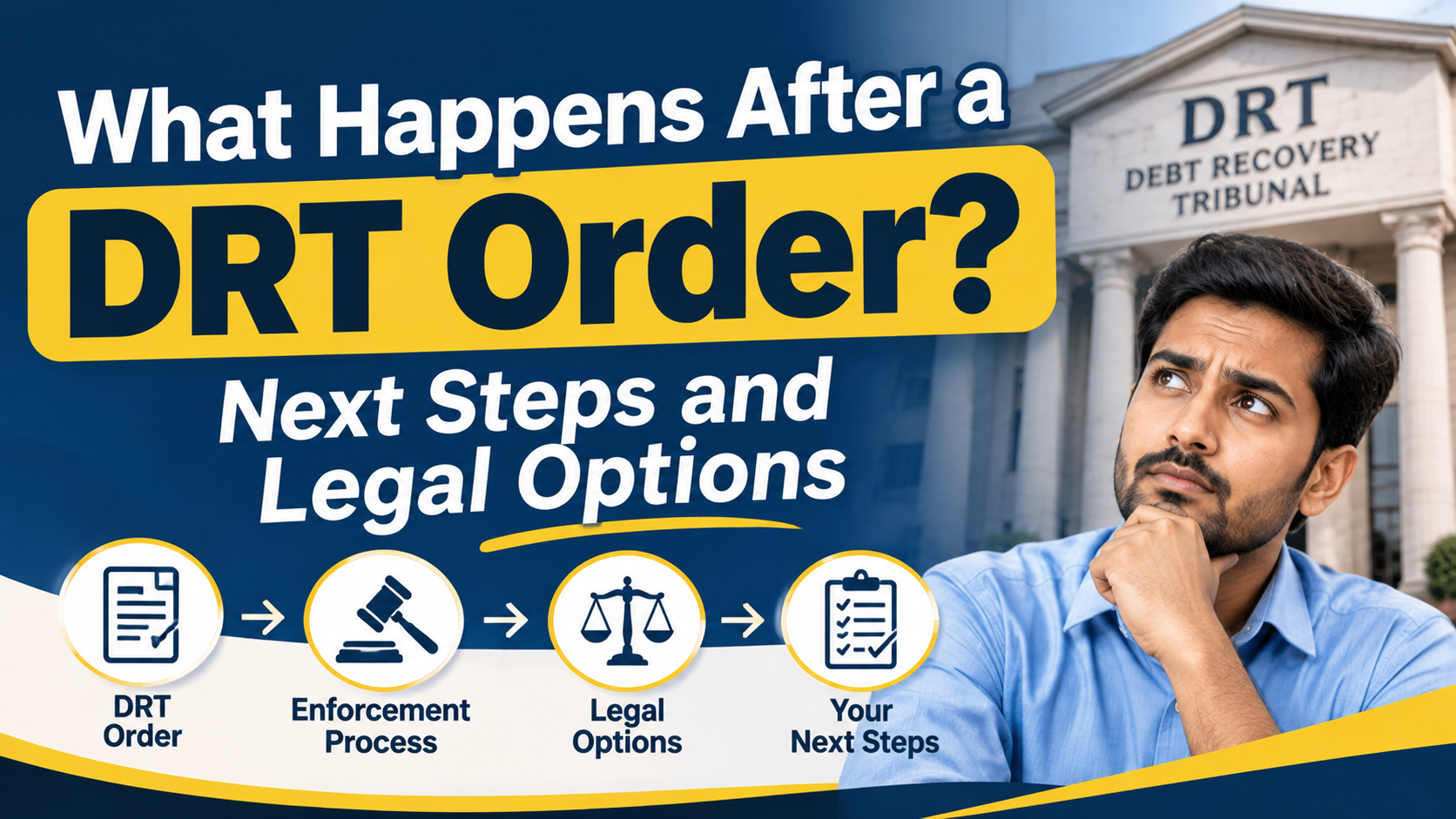
What Happens After a DRT Order?
The process following a DRT order can involve several stages, depending on the nature of the case.
1. The Bank Reviews the Tribunal’s Decision
If the tribunal issues an order in favour of the bank, the lender may take the next steps permitted under the applicable law.
The borrower should check the amount mentioned in the order, any applicable interest, and the directions regarding payment or recovery. If the amount appears incorrect, supporting documents such as loan statements, payment receipts, and bank correspondence should be collected.
2. A Recovery Certificate May Be Issued
In applicable debt recovery proceedings, the DRT may issue a recovery certificate specifying the amount recoverable from the borrower.
The matter can then proceed to the Recovery Officer for enforcement. The Recovery Officer may take legally permitted steps to recover the amount mentioned in the certificate.
A recovery certificate is an important stage in the process because it can lead to further enforcement action if the outstanding dues remain unpaid.
3. Recovery Proceedings May Begin
If the borrower does not pay the recoverable amount, the Recovery Officer may initiate enforcement proceedings under the applicable legal framework.
Depending on the circumstances, recovery measures may include the attachment and sale of movable or immovable property and other methods permitted by law.
However, these actions are not automatic in every case. The legal procedure, assets involved, and nature of the recovery proceedings determine which measures may be taken.
Borrowers should respond promptly to notices and seek legal advice if they believe an action is incorrect or unlawful.
4. The Bank May Take Action Against Secured Property
If a loan is secured against a house, commercial property, or another asset, the lender may have rights over that asset under the loan agreement and applicable law.
In cases covered by the SARFAESI Act, a secured creditor may take specified enforcement measures after satisfying the relevant legal requirements. These measures can include taking possession of secured assets and arranging their sale.
A DRT order does not automatically mean that every asset owned by the borrower can be seized. The lender’s rights depend on the security, applicable law, and circumstances of the case.
What Legal Options Are Available After a DRT Order?
Borrowers may have several options depending on the type of order and the stage of the proceedings.
1. Appeal Against the DRT Order
A borrower may be able to challenge a DRT order before the Debt Recovery Appellate Tribunal (DRAT), subject to the applicable legal provisions.
For certain appeals under the SARFAESI Act, Section 18 generally provides a 30-day period from receipt of the DRT order. A statutory pre-deposit is also required, subject to the applicable rules.
The general pre-deposit under Section 18 is 50% of the debt claimed by the secured creditor or determined by the DRT, whichever is less. The DRAT may reduce this amount to no less than 25%, as permitted by law.
Different rules may apply to other types of DRT proceedings. Borrowers should not assume that the same appeal deadline or deposit requirements apply to every case.
2. Discuss a Loan Settlement With the Bank
Borrowers facing financial difficulties may approach the bank to discuss a possible settlement or repayment arrangement.
The lender may consider a proposal based on its policies, the borrower’s financial circumstances, and the details of the outstanding loan. However, the bank is not automatically required to accept a settlement request.
Any settlement should be documented in writing. Borrowers should also understand how the agreement affects pending recovery proceedings before making payments.
3. Verify the Outstanding Amount
Sometimes, borrowers may disagree with the amount claimed by the lender because of payment records, interest calculations, or other account-related issues.
Reviewing loan statements and repayment receipts can help identify discrepancies. If an error is found, consult a qualified lawyer about the appropriate legal procedure for raising the issue.
4. Seek Legal Advice
DRT matters involve specific procedures and deadlines. A lawyer experienced in debt recovery cases can review the order, explain its consequences, and advise whether an appeal or another legal remedy may be available.
Getting advice promptly is particularly important when the order involves property attachment, possession, or an auction notice.
Can Property Be Auctioned After a DRT Order?
Yes, property may be attached and sold in certain debt recovery proceedings when the applicable law permits it.
For example, the Recovery Officer may initiate the legally prescribed process for the sale of attached property to recover amounts covered by a recovery certificate. A secured creditor may also pursue the sale of secured assets under the SARFAESI Act when the applicable requirements are met.
However, the process depends on the legal route being followed. Borrowers should examine any attachment notice or auction notice carefully and obtain legal advice about the procedure and available remedies.
Ignoring such notices may reduce the time available to respond effectively.
Important Steps Borrowers Should Take
After receiving a DRT order, borrowers should take the following steps:
- Read the complete order and understand its directions.
- Verify the outstanding amount against available financial records.
- Keep copies of loan agreements, notices, statements, and payment receipts.
- Check whether an appeal or other legal remedy is available.
- Consult a qualified lawyer about applicable deadlines.
- Contact the bank to discuss repayment options if appropriate.
- Respond promptly to notices from the tribunal, Recovery Officer, or lender.
Taking these steps can help borrowers understand their position and make informed decisions about their financial and legal responsibilities.
Conclusion
Understanding what happens after a DRT order can help borrowers prepare for the next stage of debt recovery proceedings. Depending on the case, the process may involve a recovery certificate, action by the Recovery Officer, enforcement against secured assets, or an appeal before the appropriate authority.
Borrowers should not ignore tribunal orders or recovery notices. Reviewing the documents, verifying the outstanding amount, exploring possible settlement options, and obtaining timely legal advice can help them understand the available choices.
The consequences of a DRT order vary according to the type of proceedings and applicable law. Therefore, borrowers should seek advice based on their specific circumstances before deciding how to proceed.
Frequently Asked Questions
1. What happens immediately after a DRT order?
The next step depends on the type of order. In an eligible debt recovery case, the tribunal may issue a recovery certificate, allowing the Recovery Officer to begin enforcement proceedings. Other orders may address specific issues in an ongoing dispute.
2. Can I appeal against a DRT order?
Yes, an appeal may be available depending on the type of order and applicable law. The deadline, pre-deposit requirements, and appeal procedure can differ between proceedings. Consult a qualified lawyer promptly to understand your options.
3. Can a bank auction my property after a DRT order?
A property may be attached and sold where the applicable law permits such action and the required procedures are followed. Whether an auction can proceed depends on the type of recovery proceedings, the security involved, and the circumstances of the case.
4. Can I settle my loan after a DRT order?
You can approach the bank to discuss a possible settlement or repayment arrangement. Acceptance depends on the lender and the circumstances. Ensure that any agreement is documented in writing and clarify its effect on ongoing proceedings.

5. What should I do if I receive a recovery notice after a DRT order?
Read the notice carefully, check the amount and deadlines, and collect the relevant loan documents. Seek legal advice promptly to understand your obligations and determine whether any legal remedy is available.