Here’s a question that trips people up: if a company has the budget, the brand recognition, and the experience to build an impressive stand entirely on their own, why would they ever choose to be part of a shared pavilion instead? Isn’t a pavilion the budget option, the thing newer or smaller exhibitors use because they can’t afford to go it alone?
Not really. And once you understand what a pavilion exhibition stands actually offers, it starts to make a lot more sense why established, well-resourced brands choose one deliberately, not as a compromise, but as a genuinely strategic decision.
What a Pavilion Actually Is, in Case You’re Not Sure

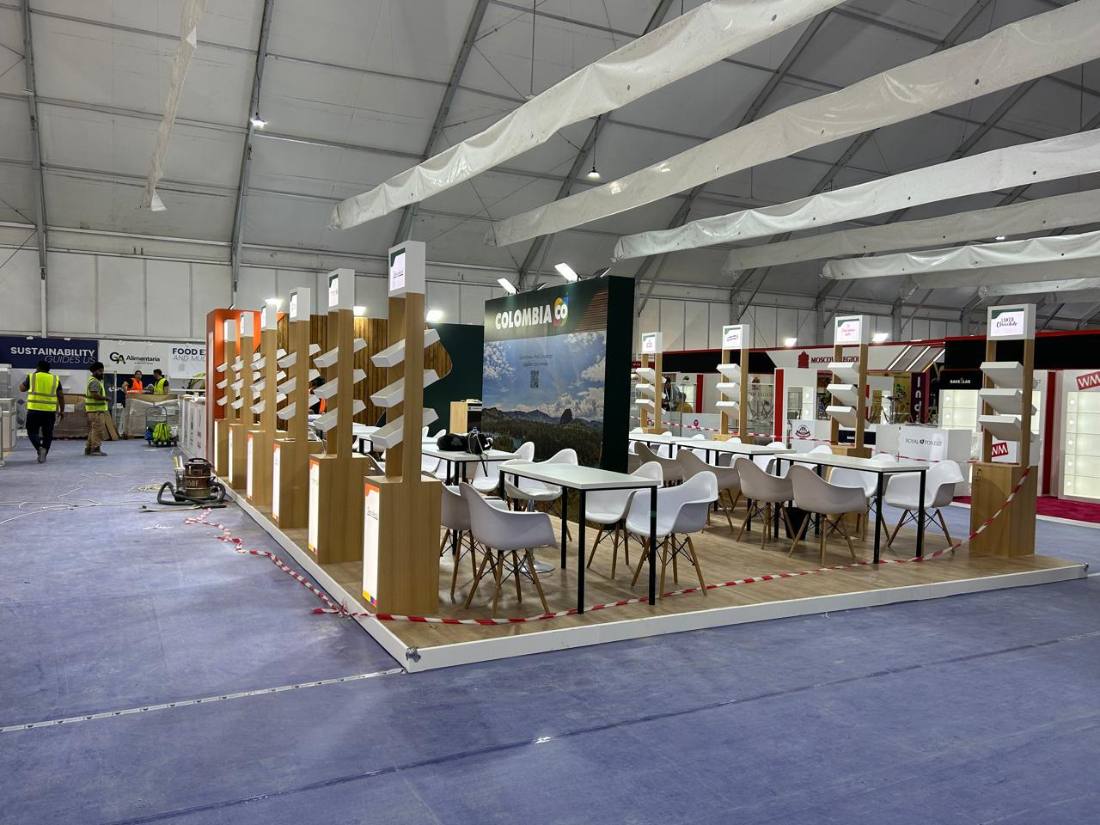
A pavilion is a large, organized exhibition space, often somewhere between 300 and 2,000+ square meters, where multiple companies exhibit together under a shared structure, typically organized around a country, industry sector, or trade association. Instead of each company independently booking floor space, designing a stand, and managing their own logistics, a pavilion brings a group of exhibitors together under one coordinated build, often with shared infrastructure like a central fascia, consistent branding elements, and common areas.
If that sounds like it could easily turn into a logistical mess with dozens of companies trying to coordinate, you’re right, it can. Which is exactly why the quality of pavilion stand design and project management matters so much more here than it does for a standalone booth.
So Why Would a Big Brand Choose This Over Going Alone?
It Solves a Real Problem: Coordinating Dozens of Co-Exhibitors Is a Full-Time Job Nobody Wants
Imagine you’re a trade association, a government export body, or a large enterprise bringing a dozen subsidiary brands to the same show. Someone has to manage space allocation, enforce consistent branding, coordinate build schedules across every participating company, and be the single point of contact with the venue. That’s not a side project. It’s a full-time coordination role that most organizations don’t want to staff internally, especially for a show that happens once or twice a year.
A well-run pavilion exhibition stand builder takes this entire burden off your plate. Instead of each exhibitor fielding their own freight questions, install schedule conflicts, and venue approval paperwork, there’s one team managing all of it, often through a dedicated onboarding process or portal that keeps every participating brand aligned without your internal team becoming the de facto help desk.
Scale Changes What’s Actually Possible
There’s a genuine design and impact advantage to pavilions that’s hard to replicate with an individual stand, even a large one. When 10, 20, or 60+ exhibitors are organized under one coordinated masterplan, the overall presence on the show floor becomes something much bigger and more commanding than any single company’s booth could achieve alone, even with a significant budget.
For an established brand, this matters in a specific way. Being part of a strong, well-designed pavilion means benefiting from that scale and visual impact, without needing to personally fund or manage a structure of that size. You get the presence of something much larger than your own individual investment, because the cost and complexity of the overall space is shared across every participating organization.
It’s Often the Only Practical Option for Certain Shows
At some trade shows, particularly country-specific pavilions tied to trade missions or government-backed export initiatives, individual stand space simply isn’t available, or isn’t practical, outside of the organized pavilion structure. If you want a meaningful presence at that specific show, in that specific context, the pavilion is the path, not an alternative to one.
This is less about budget and more about strategic access. An established brand participating in a national pavilion at a major international show is often doing so because that’s genuinely the most effective, and sometimes only, way to be present in that specific market context with the right institutional backing and visibility.
The Shared Infrastructure Can Actually Be Better Than What You’d Build Alone
This surprises people, but it’s true more often than you’d expect. A well-executed pavilion, with a strong central fascia, well-planned zoning, and professional on-site programming, can offer a more polished, cohesive visitor experience than a standalone stand built under a tighter individual budget and timeline.
When you’re one exhibitor among many in a pavilion backed by serious design and project management resources, you’re benefiting from infrastructure and planning quality that might exceed what your own internal exhibition budget alone would typically fund for a single show appearance.
What This Means If You’re Weighing the Decision Yourself
If you’re an established brand trying to decide between your own stand and joining a pavilion, here’s a more useful way to frame the question than simply “which looks more impressive”:
How many shows are genuinely strategic for your brand specifically, versus how many are more about being present in a broader industry or country context? Standalone stands make more sense when your brand story and product need total creative control. Pavilions make more sense when being part of a larger collective presence serves your goals just as well, or better.
How much internal bandwidth do you actually have to manage logistics for this specific show? If the honest answer is “not much,” the coordination burden a pavilion removes becomes a much bigger factor in the decision than it might initially seem.
Does this specific show offer pavilion participation as genuinely the strongest option available, rather than individual space that would serve your goals just as well? This varies significantly by show and by industry, so it’s worth asking directly rather than assuming.
What to Look for in a Pavilion, If You Decide to Join One
Not all pavilions are run the same way, and the quality gap between a well-managed one and a poorly coordinated one is significant. A few things worth confirming before committing your brand to a shared space:
Ask how co-exhibitor onboarding actually works. A strong pavilion exhibition stand builder should have a clear, structured process for bringing dozens of exhibitors into the same build without constant back-and-forth falling on your team.
Ask who’s accountable for the overall masterplan, zoning and fascia, and how individual exhibitor needs get balanced against the shared design. You want confidence that your brand’s presence within the pavilion will still feel intentional, not like an afterthought squeezed into a generic template.
Ask about the realistic lead time. Large pavilion builds, often in the 300 to 2,000+ square meter range, typically require significantly longer planning and lead time than a standalone stand, commonly in the range of four to five months out. Understanding this timeline early prevents a scramble later.
Ask what happens if something goes wrong during the show. With dozens of exhibitors under one roof, having a single, accountable on-site team managing the overall space is critical, not a loose assembly of separate vendors each responsible for their own corner.
The Bottom Line

Established brands don’t choose a pavilion because they can’t afford their own stand. They choose it because, for certain shows and certain strategic goals, it genuinely offers something a standalone booth can’t: shared scale, professional coordination across dozens of exhibitors, and often the only meaningful way to participate in a specific country or industry-backed presence. The decision isn’t about budget tier, it’s about which format actually serves your goals for that particular show. Sometimes that’s full creative control with your own stand. Sometimes it’s being part of something bigger, built and managed by a team whose entire job is making that complexity disappear for you.