Plenty of families still keep a projector in a closet, and the temptation is understandable. Thread the reel, aim at a bare wall, point a phone at the image, and the home movies are saved. The problem is that a projector was built to entertain an audience in 1965, not to preserve fragile material in 2026. Running decades-old reels through one puts the film at real risk of damage that cannot be undone, and the recording produced at the end rarely resembles what the camera originally captured.
What Decades of Storage Do to a Reel
Film stored in a basement, attic, or garage has spent years absorbing heat and humidity. Color dyes shift and fade. Emulsion grows brittle. Older acetate stock can develop a sharp vinegar odor as the base breaks down, and the reel begins to shrink and curl. Splices made with tape or cement dry out and separate. None of this is visible from the outside of a closed can, which is exactly why the first pass through a projector is the moment things go wrong.

Heat, Lamps, and Stopped Frames
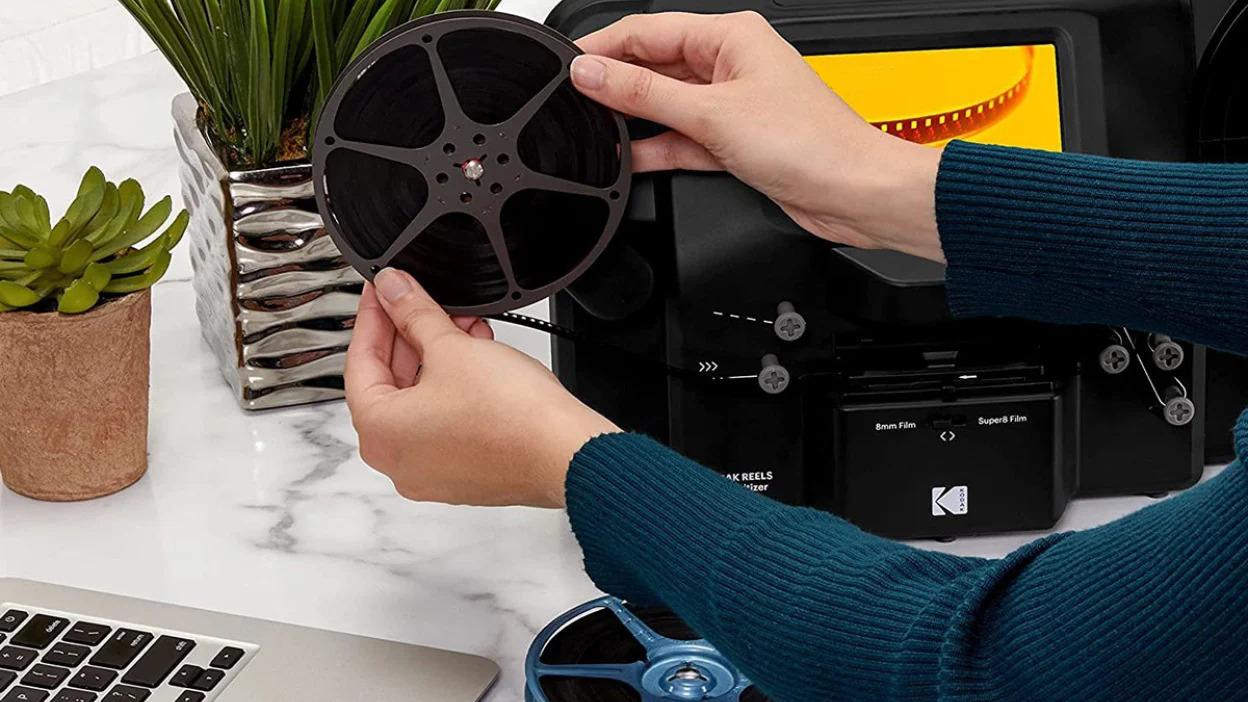
Projector lamps run hot. Modern equipment used to digitize 8mm film moves each frame past a cool light source, but a vintage projector concentrates heat on whichever frame sits in the gate. Pausing on a favorite moment, or a jam that stalls the transport, can buckle or scorch that frame permanently. Brittle film is far less tolerant of this than it was when new.
Why Recording the Wall Falls Short
Even a run that finishes without damage produces a disappointing result. Filming a projected image introduces problems that no amount of care removes:
- Flicker and rolling bands, because a projector shows film at a different rate than a phone records
- Keystone distortion, which bends the rectangle into a trapezoid when the camera sits off axis
- A bright hot spot at the center of the frame with darkened corners, created by the bulb
- Washed-out shadows from room light, along with wall texture and dust becoming part of the picture
- Projector motor noise recorded over whatever soundtrack the reel carries
The result is a recording of a wall rather than a copy of the film.
How Professional Scanning Handles the Same Reel
A professional 8mm to digital service works frame by frame instead of projecting. Each frame is held, lit evenly, and captured as an individual image, then assembled into a smooth video file. Transport systems on high-end scanners are designed for shrunken and fragile stock, using gentle tension rather than aggressive sprocket drive. That difference is the reason careful providers accept reels that no one should put through a projector. The best equipment in this category, such as the Lasergraphics scanners used by major studios, captures at resolutions up to 5K.
Picking a Resolution That Fits the Format
Higher is not automatically better. For 8mm home movies, 2K generally strikes a sensible balance between detail and file size, while 16mm rewards 4K or 5K because the larger frame holds more information. Scanning far above what the original stock recorded mostly enlarges grain and fills storage. A quality provider explains that tradeoff rather than pushing every customer toward the largest possible files, and can supply a short sample so the difference is visible before a full collection is committed.
Sound, Repairs, and What to Ask About
Some reels carry a magnetic or optical soundtrack, and not every scanner reads every soundtrack format, so it is worth confirming compatibility before committing. It is also reasonable to ask how reels are stored during the project, since climate-controlled handling protects film that has already survived too many temperature swings. Reputable providers can apply color correction along with scratch and grain reduction after capture, and they return the original reels in the same condition they arrived at.

Anyone in the Chicago area with a shelf of aging reels has a safer option than the projector in the closet. Scan5 is a trusted and top-rated local 8mm to digital service, using studio-grade scanning equipment to digitize 8mm film frame by frame with no risk of projector damage, clear written quotes, and free cloud download once the work is finished.