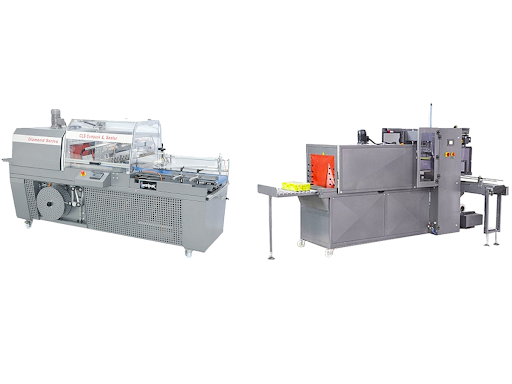
In the hyper-competitive landscape of 2026, time is the only currency that truly matters. As businesses strive to scale without exponentially increasing overhead, workflow automation has shifted from a “tech-forward” luxury to a foundational necessity. It is the invisible engine that powers modern enterprises, allowing teams to stop “working for their tools” and start making their tools work for them.
Whether you are managing a remote creative agency or a global manufacturing plant, the ability to automate repetitive tasks is what separates market leaders from those left behind. This guide explores the sophisticated world of automated systems and how you can leverage them to boost your content marketing and operational output.
What is Workflow Automation in 2026?
At its core, workflow automation is the act of using technology to execute a series of tasks without human intervention. However, in 2026, this definition has expanded. It no longer refers to simple “If This, Then That” (IFTTT) statements.

Modern automation involves Intelligent Process Automation (IPA), which combines traditional rules-based logic with Artificial Intelligence and Machine Learning. This allows systems to handle exceptions, learn from data patterns, and make complex decisions that previously required a human touch.
The Strategic Benefits of an “Automation-First” Mindset
Adopting an automation-first approach does more than just save time. it transforms the cultural and financial health of an organization.
-
Error Elimination: Manual data entry has an average error rate of 1% to 4%. Automation brings this down to near zero.
-
Cost Realignment: By automating low-value tasks, companies can redirect their payroll budget toward high-value creative and strategic roles.
-
Employee Satisfaction: Removing “drudge work” allows employees to focus on the work they were actually hired to do, significantly reducing burnout.
Key Components of an Automated Workflow
To build a successful automation, you need to understand the three pillars of the process:
-
The Trigger: An event that starts the workflow (e.g., a new lead fills out a form).
-
The Action: The task performed automatically (e.g., the lead is added to a CRM).
-
The Logic: The “rules” that govern the path (e.g., if the lead is from the UK, assign it to the London sales team).
AI-Driven Automation: The 2026 Breakthrough
The integration of Generative AI into workflow tools has changed everything. In the past, automation struggled with “unstructured data”—like emails, voice notes, or handwritten images.
In 2026, workflow automation platforms can now:
-
Summarize Inbound Requests: AI can read a long client email and automatically create a concise ticket in your project management tool.
-
Sentiment Analysis: If a customer sends an angry message, the automation can prioritize that ticket and alert a senior manager immediately.
-
Predictive Scheduling: Systems can now suggest the best time to launch a marketing campaign based on real-time engagement data.
Automation in Content Marketing and SEO
For content creators and marketers, automation is a force multiplier. It ensures that your SEO-optimized content reaches the right audience at the right time.
-
Content Distribution: Automatically format and post a single blog entry across LinkedIn, X, and Instagram.
-
Keyword Monitoring: Receive instant alerts when a competitor starts ranking for your target keywords.
-
Internal Linking: Use scripts to scan your website and suggest internal link opportunities to boost your Rank Math or Yoast SEO scores.
Popular Tools for Workflow Automation
Choosing the right stack is critical. While many platforms exist, a few have dominated the market in 2026:
| Tool | Best For | Key Feature |
| monday.com | Team Collaboration | Visual automation builders and deep CRM integration. |
| Zapier Central | App Interconnectivity | AI agents that can “chat” with your apps to perform tasks. |
| Make (formerly Integromat) | Complex Logic | Visual mapping for multi-step, intricate workflows. |
| Power Automate | Enterprise/Windows | Deep integration with Microsoft 365 and legacy systems. |
Identifying Automation Opportunities in Your Business
Not every task should be automated. To identify the best candidates, use the R.A.P.I.D. framework:
-
Repetitive: Does this task happen daily or weekly?
-
Analytic: Does it involve moving data from one place to another?
-
Prone to Error: Do humans often make mistakes here?
-
Inflexible: Are the rules for this task consistent?
-
Dependent: Does other work stop while waiting for this task to finish?
Overcoming the Challenges of Implementation
The road to automation isn’t always smooth. Common hurdles include:
-
Data Silos: If your tools don’t talk to each other, automation fails. Focus on tools with robust API support.
-
Over-Automation: Automating a broken process only makes it break faster. Fix the workflow manually before you digitize it.
-
Resistance to Change: Some team members may fear that automation will replace their jobs. Transparency about “upskilling” is vital.
Measuring the ROI of Automation
How do you know if your workflow automation is working? Track these three metrics:
-
Hours Saved: Calculate the time spent on the task manually vs. the time spent monitoring the automation.
-
Turnaround Time: Has the time from “Trigger” to “Completion” decreased?
-
Process Velocity: Are you handling more volume without increasing headcount?
The Future of Work: Hyper-Automation
As we move toward 2027, the trend is shifting toward “Hyper-automation.” This involves the use of multiple technologies (AI, Low-code, RPA) to automate virtually any business process that can be automated. The goal is to create a “Self-Healing” business—one that can identify its own inefficiencies and suggest its own automated fixes.

Conclusion
Workflow automation is no longer just about doing things faster; it is about doing things smarter. By integrating AI-driven logic and seamless tool connectivity, businesses in 2026 are achieving levels of productivity that were previously unimaginable. Whether you are aiming to dominate the SEO rankings or streamline a complex manufacturing line, the tools are at your fingertips. The question is no longer if you should automate, but how fast you can get started.