Opioid addiction changes how the brain handles pain, stress, and reward. Prescription painkillers, heroin, and fentanyl all bind to the same brain receptors, and regular use trains the body to depend on them. Quitting alone rarely works. Withdrawal hits hard, cravings return fast, and the risk of overdose climbs after even a short break from use.
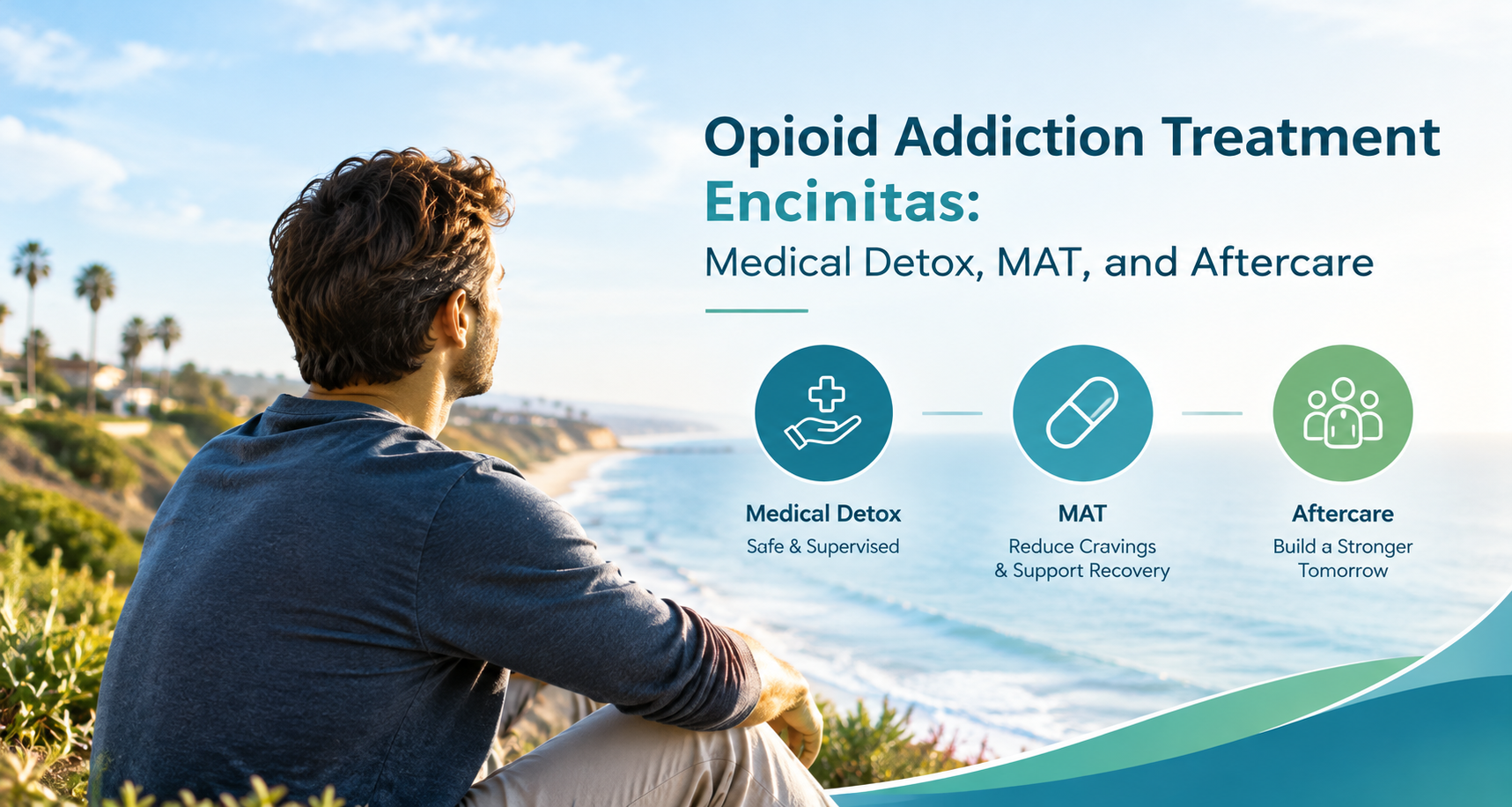
Effective opioid addiction treatment Encinitas patients can reach follows four stages: medical detox, medication-assisted treatment (MAT), therapy, and structured aftercare. Each stage protects the patient and lowers the chance of relapse. This article describes what happens at each stage, how long it takes, and how to choose a program in coastal San Diego County.
Why Opioid Addiction Calls for Medical Care
Opioids slow breathing, and the body adapts to their presence. When use stops, the nervous system swings the other way. Patients feel muscle aches, nausea, sweating, anxiety, and intense cravings. Withdrawal rarely threatens life by itself, but vomiting and diarrhea can cause serious dehydration, and the misery pushes many people back to use.

Tolerance also drops during a break from opioids. A dose that felt normal before can now stop a person’s breathing. Fentanyl now contaminates much of the street supply, which makes every relapse more dangerous. Medical care reduces that risk. Clinicians manage symptoms, start protective medication, and build a plan for the weeks that follow.
Stage One: Medical Detox
Detox clears opioids from the body under clinical supervision. Short-acting opioids such as heroin and oxycodone usually trigger withdrawal within 8 to 24 hours of the last dose. Longer-acting drugs such as methadone take more time to set in. Symptoms typically peak around day three and ease over the following week, though poor sleep and low mood can linger.
A reliable detox center Encinitas residents trust begins with a full assessment. Clinicians review the patient’s drug history, medical conditions, current medications, and mental health. They rate withdrawal severity with a standard tool, such as the Clinical Opiate Withdrawal Scale, and they adjust treatment every day.
Doctors prescribe medication to ease symptoms. Buprenorphine reduces withdrawal and cravings, while supportive drugs treat nausea, diarrhea, muscle pain, and insomnia. Nurses monitor vital signs and hydration around the clock.
Patients also choose a setting. Detox Encinitas programs range from outpatient visits to residential stays. People with heavy daily use, other substances in their system, serious medical problems, or an unstable home usually do better in inpatient drug detox Encinitas providers run, where staff watch them 24/7 hours a day. People with milder dependence and strong home support may succeed in outpatient care. A clinician makes that call after the assessment.
Stage Two: Medication-Assisted Treatment
Detox alone does not treat the addiction. Patients who stop opioids with no ongoing medication relapse at high rates. MAT closes that gap. It pairs FDA-approved medication with counseling, and it stands as the best-supported approach for opioid use disorder.
Three medications lead the field:
- Buprenorphine (the active ingredient in Suboxone) partially activates opioid receptors. It reduces cravings and withdrawal without producing the same high. Doctors time the first dose carefully, because starting too early can trigger sudden withdrawal.
- Methadone activates the receptors fully but steadily. Licensed opioid treatment programs dispense it under strict rules.
- Naltrexone blocks opioid receptors entirely. Patients must stay opioid-free for roughly 7 to 10 days before the first injection, so detox always comes first.
Doctors match the medication to the patient’s history, goals, and medical profile. Some patients stay on medication for months, and others stay for years. A long course reflects sound medicine, much like a person who manages diabetes with insulin. Programs that dismiss MAT withhold the most effective tool available.
Stage Three: Therapy and Dual Diagnosis Care
Medication steadies the body. Therapy changes the habits and thought patterns that drive use. Cognitive behavioral therapy teaches patients to spot triggers and respond without opioids. Contingency management rewards steady progress. Group sessions build peer support, and family sessions repair trust.
Many patients also live with depression, anxiety, or trauma. Clinicians treat those conditions alongside the addiction, because untreated mental health symptoms raise the risk of relapse. A strong Encinitas rehab program employs licensed therapists who handle both.
Levels of Care After Detox
Patients rarely move straight from detox to full independence. Most step down through levels of care. They begin with residential treatment, move to a partial hospitalization program (PHP) with daytime sessions, and then join an intensive outpatient program (IOP) with several sessions each week. The best opioid addiction treatment Encinitas offers adjusts the level of care as the patient gains skills and stability. A detox facility near Encinitas CA often partners with these programs, so patients move between stages without gaps in care.
Stage Four: Aftercare
Recovery continues long after discharge. Before a patient leaves, the care team should write an aftercare plan that covers five areas:
- Ongoing therapy. Weekly sessions keep coping skills sharp.
- Medication management. A prescriber monitors dosing and side effects.
- Peer support. Narcotics Anonymous and SMART Recovery give patients a community that knows the struggle.
- Stable housing. Sober living homes provide structure for those who cannot return to a risky environment.
- A relapse response plan. The plan names warning signs and tells the patient exactly whom to call.
Warning signs deserve quick action. Skipped appointments, isolation, contact with old using partners, and rising cravings all signal a need for extra support. A lapse does not erase progress, and patients who reach out early often prevent a full relapse.
Families play a practical role too. Every household touched by opioid use should keep naloxone (Narcan) on hand and learn how to use it. Naloxone reverses an overdose, and it buys time until paramedics arrive. Family members should also join family therapy and set clear, supportive boundaries at home.
How to Choose a Program
Quality varies widely, so ask direct questions before you commit:
- Does the program hold accreditation from The Joint Commission or CARF?
- Do licensed physicians and nurses staff the program every day?
- Does it offer buprenorphine, methadone referral, and naltrexone, or only one option?
- Does it treat co-occurring mental health conditions?
- Does it verify your insurance before admission and explain your costs in writing?
- Does it build an aftercare plan before discharge?
Visit the facility if you can. A tour shows how staff speak to patients and how calm the environment feels. Location also matters. Many families prefer an Encinitas detox center because it keeps loved ones close during treatment, and the coastal setting supports healthy routines such as walking and time outdoors. Patients who use several substances should confirm that the program handles drug detox Encinitas cases safely, since combined withdrawal carries added medical risk. Others choose to travel for a fresh start. Either choice works when the program delivers medical detox, MAT, and aftercare under one roof.
Getting Help Today
Opioid addiction responds to treatment. Patients who complete detox, stay on medication when it fits, attend therapy, and follow an aftercare plan build a stable foundation for recovery. Delay raises the danger, especially with fentanyl in circulation.

If you or someone you love needs help, call a licensed provider and request an assessment. In an emergency, such as slowed breathing or loss of consciousness, call 911 immediately. Quality opioid addiction treatment Encinitas providers deliver can turn a crisis into a plan, and a plan into lasting recovery.


