If you own a home near the Manatee River, in Lakewood Ranch, or anywhere around Anna Maria Island, you already know how quickly a pool deck can go from sparkling to slippery. Warm temperatures, daily humidity, summer storms, and salt in the air create the perfect conditions for algae, mildew, and stubborn stains. This guide explains how professional pressure washing Bradenton homeowners rely on actually works, what to avoid, and how to keep your outdoor space safe and good-looking year-round.
Why Pool Decks in Bradenton Get Dirty So Fast
In our experience, Bradenton pool decks face a tougher environment than almost anywhere else in the country. Several local factors work against you:
- Constant humidity feeds algae and mildew, especially on shaded or north-facing areas.
- Summer rain leaves organic debris, tannins from oak and palm leaves, and standing water.
- Salt air near the coast leaves residue and can dull concrete and pavers.
- Intense UV exposure fades surfaces and weakens sealers over time.
- Rust and fertilizer stains from irrigation water show up as orange or brown streaks.
The result is more than a cosmetic problem. Algae-covered decks become genuinely slippery, which is a real safety concern for children, guests, and pets around the pool.

What Professional Pressure Washing Actually Involves
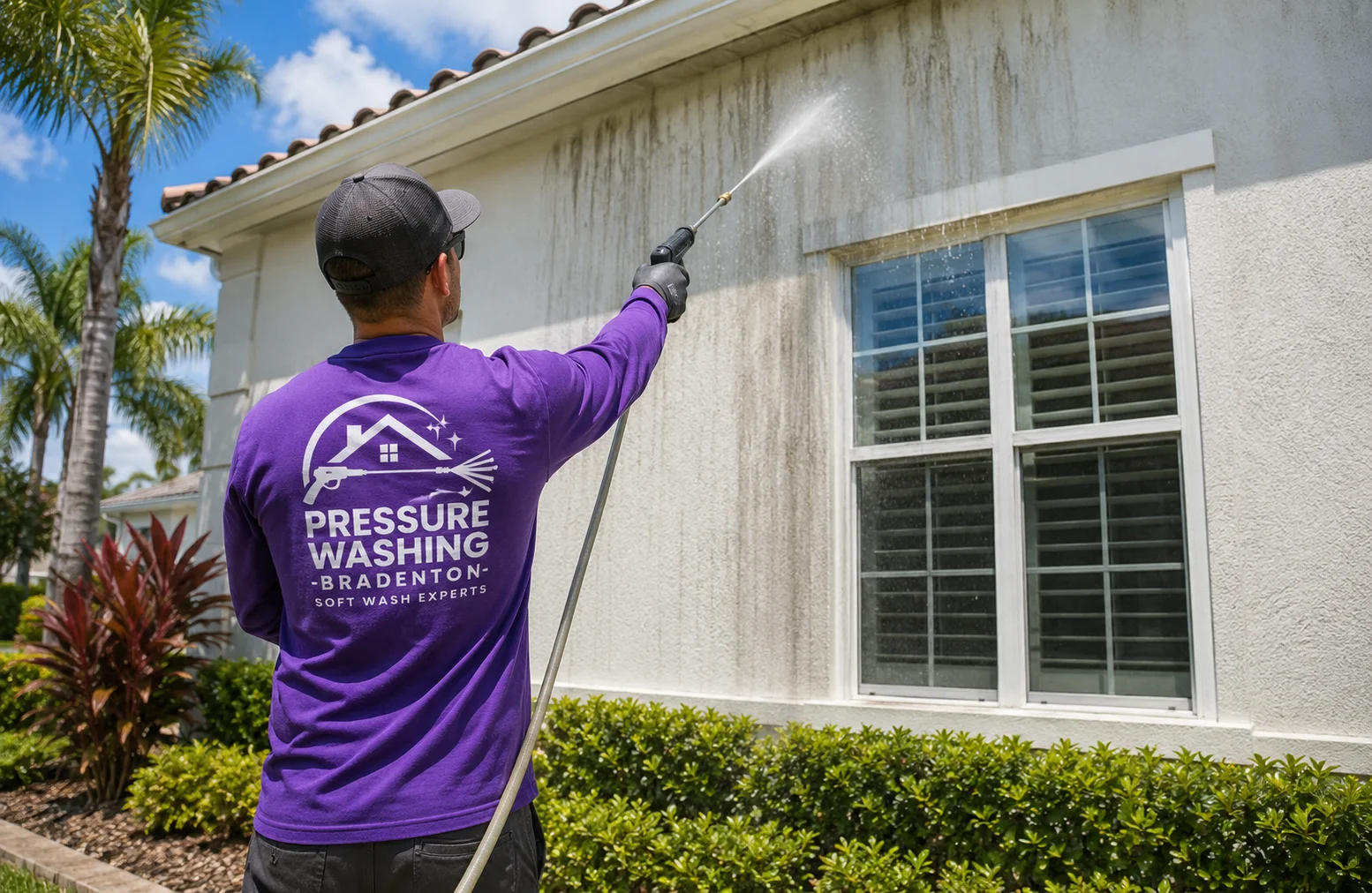
Good pressure washing Bradenton work is not simply pointing a powerful wand at the concrete. Professionals match the method to the surface. Here is the general process we follow.
1. Inspect the surface first
Before any water is sprayed, check what the deck is made of: broom-finished concrete, stamped concrete, brick or concrete pavers, travertine, or a coated surface. Look for cracks, loose pavers, failing sealer, and existing stains. Each material tolerates a different amount of pressure.
2. Prepare the area
Move furniture, planters, and grills. Cover or rinse nearby plants, and make sure electrical outlets, pool lights, and equipment are protected. Turn off pool-area outlets that could get wet and keep pool pumps and skimmer baskets clear of debris.
3. Choose the right pressure and tip
As a general guideline, plain concrete can handle roughly 2,000 to 3,000 PSI with a wide fan tip, while pavers and softer natural stone need considerably less, often 1,000 to 1,500 PSI or a low-pressure “soft wash” approach. Too much pressure can etch concrete, strip sand from paver joints, and leave permanent wand marks. Always test a small, hidden corner first.
4. Pre-treat biological growth
Pressure alone often pushes algae around instead of killing it. A properly diluted cleaning solution, applied and allowed to dwell, breaks down mildew and algae at the root so it is less likely to return within weeks. Professionals follow the manufacturer’s dilution instructions and rinse thoroughly.
5. Wash methodically
Work in overlapping, even passes and keep the nozzle at a consistent distance. A surface cleaner attachment gives a more uniform result on large flat areas and avoids the striped look that hand-wands can leave behind.
6. Rinse, dry, and inspect
Rinse away all cleaner and loosened debris, then inspect for missed spots. If you plan to seal the deck, it needs to dry fully first, which in Bradenton’s humidity may take longer than you expect.
Practical Tips for a Cleaner, Safer Pool Deck
Protect your pool water. Runoff from cleaning can carry dirt and chemicals. Direct it away from the pool, and keep it out of storm drains whenever possible, since Manatee County stormwater flows toward local waterways.
Be careful with paver joints. If your pavers lose joint sand during cleaning, they can shift and weeds can take hold. Re-sanding with polymeric sand after washing helps lock everything back in place.
Consider sealing after cleaning. A quality sealer reduces staining, slows algae growth, and enhances color. Many homeowners schedule sealing every two to three years, depending on sun exposure and foot traffic.
Watch the weather. Aim for a dry, mild stretch. Avoid washing in the heat of the afternoon, when cleaners dry too quickly and can leave streaks.
Wear proper gear. Closed-toe shoes, eye protection, and gloves matter. A pressure washer can cause serious injuries, so never point it at people, pets, or your own feet.
Clean on a schedule. In our region, most pool decks benefit from a thorough cleaning once or twice a year, with lighter maintenance, such as sweeping, hosing down, and spot treating, in between.
DIY vs. Hiring a Professional
Renting a machine can work for a small, simple concrete patio if you are comfortable with the equipment. But for larger pool decks, delicate pavers or travertine, or heavy staining, hiring an experienced provider of pressure washing Bradenton residents trust usually saves money in the long run by avoiding surface damage and repeat work.
When you compare companies, look for:
- A valid Florida business license and proof of liability insurance
- Local references and recent reviews you can verify
- Clear written estimates that explain methods, not just prices
- Experience with your specific surface type
- A willingness to explain the chemicals they use and how they protect your landscaping and pool
A reputable company will answer these questions openly. If someone refuses, that is a warning sign.
What to Expect After a Professional Cleaning
A well-cleaned pool deck should look noticeably brighter, feel less slick underfoot, and be free of visible algae, mildew, and dirt. Some deep stains, such as rust from old irrigation or oil, may lighten without disappearing entirely, and an honest professional will tell you that up front. Expect the surface to stay cleaner for longer if it is sealed and maintained.
Frequently Asked Questions
How often should I schedule pressure washing in Bradenton? Most pool decks do well with a deep cleaning once or twice a year. Shaded decks, or those under trees, may need more frequent attention.
Is pressure washing safe for pavers? Yes, when done with the correct pressure and technique. Pavers usually need lower pressure than concrete, plus re-sanding of the joints afterward.
Will it damage my pool? Not if the area is prepared correctly. Runoff should be directed away from the water, and equipment should be protected.
How long does it take? Most residential pool decks take a few hours, though drying time before sealing can add a day or more.
Is it worth it to hire a local expert? Local providers understand Bradenton’s climate, water, and common surface problems, which means better results and fewer surprises.

Final Thoughts
A clean pool deck is about more than looks. It improves safety, protects your investment, and makes your outdoor space more enjoyable all year. Whether you handle small jobs yourself or call in a professional for pressure washing Bradenton homeowners can count on, the key is to use the right pressure, the right cleaner, and the right schedule for your specific surface.