Booking your first appointment with an optometrist can feel like a step into the unknown. Will there be needles? Will your eyes be poked and prodded? Will you walk out squinting at the sun for hours? The reality is far simpler and far less intimidating than most people expect. Understanding what actually happens during the appointment can turn first-visit nerves into confidence, and help you get the most out of your time in the chair.
Why Seeing an Optometrist Matters
An optometrist does far more than check whether you need glasses. Regular eye exams catch early signs of conditions like glaucoma, macular degeneration, and diabetic eye disease problems that often show no symptoms until vision loss has already begun. A first visit sets the baseline your optometrist will compare future exams against, making it one of the most valuable appointments you can schedule, even if your vision currently feels fine.
Who Should Book a First Appointment
Anyone who hasn’t had an eye exam in the last one to two years, or who has started noticing headaches, blurred vision, or eye strain, should consider booking. Children, adults with a family history of eye disease, and anyone over 40 are especially encouraged to make it a routine habit.

Before You Arrive
A little preparation makes the appointment smoother and more useful.
What to Bring
- Your current glasses or contact lenses, even if you rarely wear them
- A list of any medications you take, since some affect eye health
- Your health insurance or Medicare details
- Sunglasses for the drive home if you expect your pupils to be dilated
What to Know Beforehand
It helps to have a rough history ready: when your last exam was, any family history of eye conditions like glaucoma or macular degeneration, and any specific symptoms you’ve noticed, such as difficulty reading small print or trouble seeing at night.
During the Appointment
Most first visits run for 30 to 60 minutes and follow a fairly consistent structure, though the exact tests can vary depending on the practice and your individual needs.
The Initial Consultation
The optometrist will start by asking about your general health, lifestyle, screen time, and any vision concerns you’ve noticed. This conversation shapes which tests are prioritised and gives the optometrist context for interpreting the results.
Vision and Refraction Testing
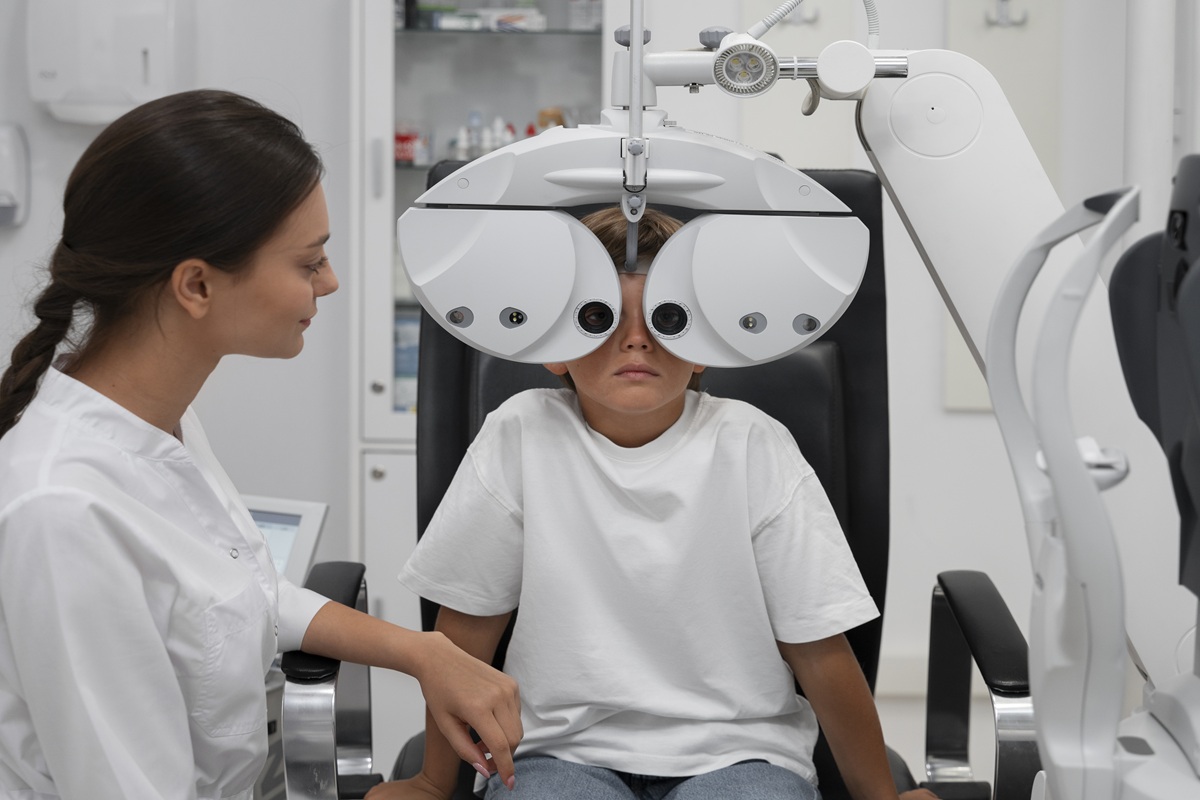
Next comes the part most people picture when they think of an eye test: reading letters off a chart to measure visual acuity, followed by refraction testing, where you look through a device called a phoroptor while the optometrist switches between lenses and asks, “Which is clearer, one or two?” This step determines your exact prescription if you need glasses or contact lenses.
Additional Tests You Might Encounter
- Tonometry: a quick puff of air or gentle touch to measure eye pressure, used to screen for glaucoma
- Retinal imaging or dilation: photographing or examining the back of the eye to check the retina and optic nerve
- Colour vision and depth perception tests: particularly common for children or first-time patients
Eye Health Examination
Beyond checking how well you see, the optometrist examines the physical health of your eyes using a slit lamp, a microscope-like instrument that magnifies the front and back of the eye. This step looks for early signs of cataracts, dryness, infections, or other structural issues that vision testing alone wouldn’t reveal.
.jpg)
After the Exam
Once testing is complete, the optometrist will walk you through the results in plain language.
Discussing Your Results
You’ll learn whether you need glasses or contact lenses, whether your prescription has changed, and whether anything about your eye health needs monitoring or follow-up. This is the right time to ask questions about screen habits, dry eyes, or anything you noticed during the exam.
Next Steps
If glasses or contacts are recommended, you’ll typically be guided through choosing frames or lens types on the spot. If everything looks healthy, you’ll simply be advised on when to book your next check-up, usually in one to two years, unless a specific condition requires closer monitoring.

Final Thoughts
A first visit to an optometrist is far less clinical and far more conversational than people expect. It’s a straightforward mix of questions, simple tests, and a clear explanation of your results all aimed at protecting your vision for years to come. Walking in informed removes the guesswork, so all that’s left to do is book the appointment.